
Dicranum tauricum
Dicranum tauricum
Description
Growing requirements
Dicranum tauricum is a perennial moss species belonging to the Dicranaceae family. This bryophyte is primarily found in forest environments, where it colonizes decaying wood, stumps, and the bark of deciduous and coniferous trees.
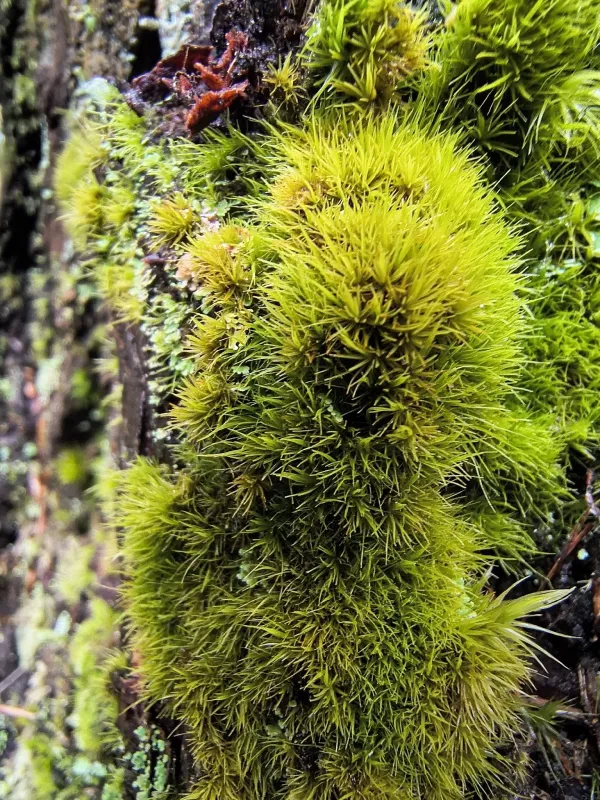
The moss is characterized by the formation of dense, yellowish-green tufts. A distinct botanical feature of this species is its brittle, narrow leaves, which break off easily to serve as propagules, enabling the plant to colonize new suitable substrates nearby.
The environmental requirements for Dicranum tauricum focus on high humidity and shade. It thrives in temperate forest microclimates where air moisture levels remain consistently high throughout the growing season.
Regarding its substrate preferences, this species requires a stable, slightly acidic, and moist environment. In artificial settings, such as terrariums or restoration projects, maintaining proper moisture levels without allowing waterlogging is essential for healthy growth.
The ornamental use of Dicranum tauricum is growing in the sector of forest-themed landscaping and biological garden design. It does not require conventional fertilization but relies heavily on the maintenance of a naturalistic micro-environment to thrive.
Main diseases and pests
The primary threat to Dicranum tauricum is the loss of natural habitat due to deforestation and land development. The alteration of local hydrology significantly reduces the viability of the moss colonies, leading to rapid desiccation.
As a sensitive bioindicator, this species is highly susceptible to air pollution. Nitrogen and sulfur compounds from industrial activities can impair its physiological processes, often leading to localized extinction in affected areas.
Interspecific competition from invasive plant species or more aggressive mosses can displace Dicranum tauricum. Changes in light intensity, such as canopy thinning, often create conditions that favor competitive species over this shade-loving moss.
Fungal pathogens represent an additional threat, particularly when airflow is restricted. Overcrowding of the tufts combined with improper moisture levels creates a breeding ground for organisms that decay the plant structure.
Physical disturbance is a major limiting factor in its recovery. Because Dicranum tauricum has a relatively slow growth rate, any destruction of the moss layer takes years to recover, making it vulnerable to sustained human activity.