
False dicranum moss
Dicranum spurium
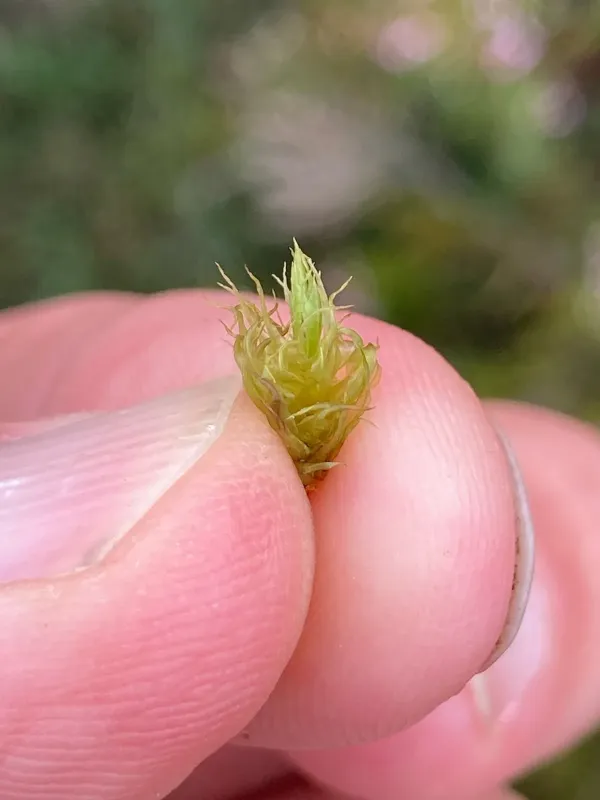
Description
Growing requirements
False dicranum moss (Dicranum spurium) is a perennial species of moss belonging to the Dicranaceae family. It is widely recognized in botany for its distinct cushion-forming growth habit in diverse forest ecosystems.
The plant originates from temperate regions of the Northern Hemisphere, where it thrives on moist, sandy soils, forest floors, and decaying wood. It is a key constituent of many forest ground covers in Eurasia and North America.
Requirements for growth include high atmospheric humidity and consistent soil moisture. It is a shade-tolerant plant that experiences rapid dehydration and tissue death if exposed to intense sunlight or dry winds.
Botanically, this moss forms dense mats with upright shoots. Its leaves are structurally adapted to retain moisture, allowing the plant to survive in shaded environments where evaporation rates are naturally low.
In practice, cultivating this species requires a controlled environment that mimics the forest floor. Substrate composition should be acidic and well-draining, typically utilizing a mixture of fine sand and organic peat matter.
Main diseases and pests
Environmental pollution is the primary threat to False dicranum. As a bryophyte, it absorbs water and nutrients directly from the air, making it extremely vulnerable to atmospheric contaminants and acidic rain.
Climate change, manifesting as prolonged droughts or unpredictable temperature shifts, causes significant stress to the colonies, leading to brown-outs and failure to regenerate.
Improper watering regimes that lead to waterlogged conditions can induce fungal pathogens, which rapidly destroy the root system and the cellular integrity of the moss stems.
Physical damage, such as foot traffic or mechanical disturbance, significantly slows down growth. Given its slow reproductive rate, recovery from such damage can take several years.
Eutrophication of the soil, caused by nitrogen-rich runoff, encourages the invasion of competing vascular plants, which can eventually outcompete the moss for light and space.