
Orthodicranum montanum
Orthodicranum montanum
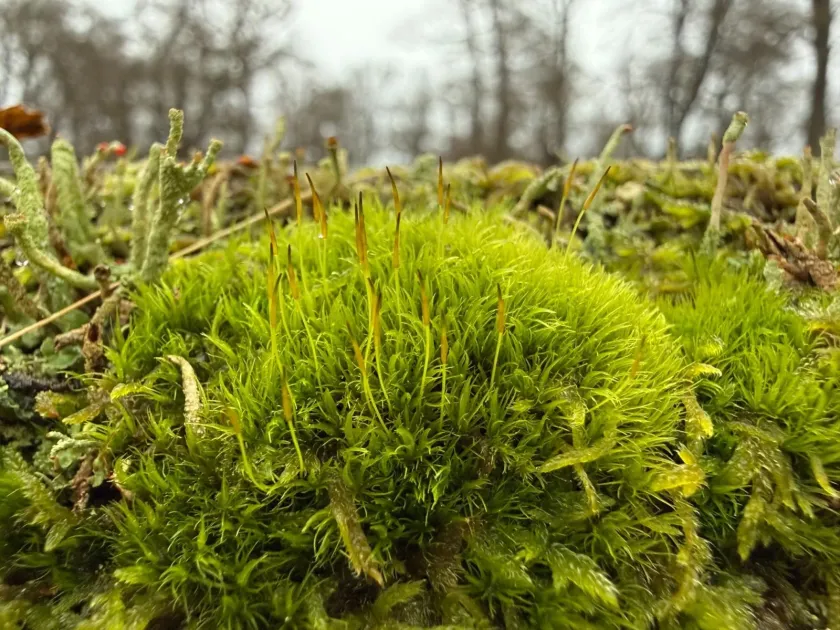
Description
Growing requirements
Orthodicranum montanum is a member of the Dicranaceae family, classified as a leafy moss. It serves as an essential element in forest ecosystems, contributing to moisture retention and providing a micro-habitat for diverse microscopic soil organisms.
The species is widespread across the Northern Hemisphere, predominantly found in temperate forest zones. It typically colonizes bark, decaying wood, or acidic substrates, thriving in shaded environments where humidity levels remain relatively stable throughout the year.
Botanically, the plant grows in compact tufts. Its leaves are lanceolate, exhibiting a distinct adaptation to dry conditions by curling when moisture is scarce, which helps the organism conserve water until more favorable conditions return.
Environmental requirements for this moss are quite specific. It prefers shaded areas protected from direct sunlight and thrives on acidic substrates. High air humidity is crucial for its metabolic processes and successful development of colonies.
While not a conventional agricultural crop, it acts as a bioindicator. Foresters and ecologists often monitor its presence as a sign of environmental health, as the species is highly sensitive to the ecological stability of the forest canopy.
Main diseases and pests
The primary threat to Orthodicranum montanum is the loss of natural habitat due to large-scale logging operations. The removal of old-growth trees and woody debris significantly reduces available substrates for colonization.
Air pollution represents a major threat to this moss. Because it absorbs water and nutrients directly through its surface, it is extremely vulnerable to high concentrations of sulfur dioxide and heavy metals present in polluted air.
Climate change, manifesting as prolonged droughts and increased temperatures, poses a significant risk to the survival of moss colonies. The species lacks mechanisms to survive extreme, long-term water deficit, leading to population decline.
Increased human-induced changes to the forest structure, such as soil compaction and altered microclimates, hinder the growth of the moss. When the forest floor dries out, the delicate balance required by the species is destroyed.
Lack of conservation measures in managed forests often leads to the fragmentation of its populations. Maintaining the structural integrity of the forest ecosystem is essential for the long-term survival of this species.