
Dicranoweisia cirrata
Dicranoweisia cirrata
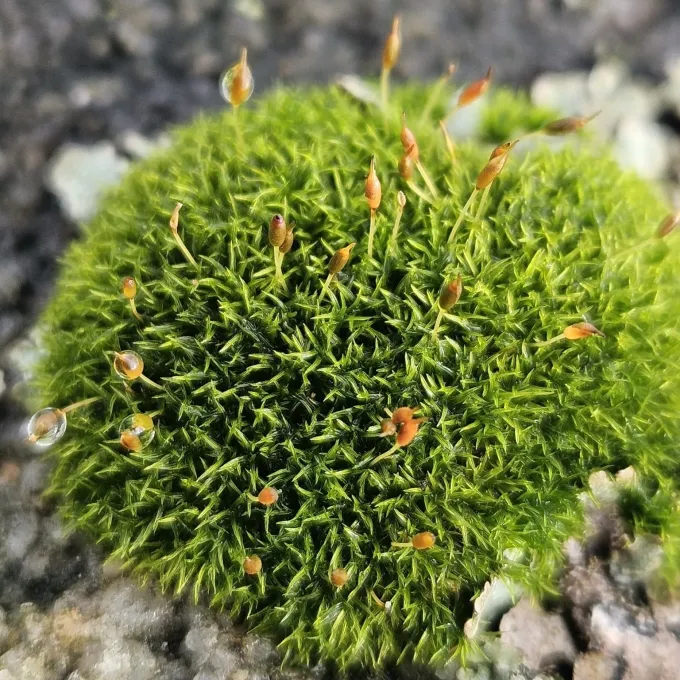
Description
Growing requirements
Dicranoweisia cirrata is a species of moss belonging to the Dicranaceae family. While it is not a commercial agricultural crop, it plays a vital role as a pioneer species in forest ecosystems, contributing to the biodiversity of epiphytic vegetation on tree bark and decaying wood.
The plant is widely distributed across the temperate regions of the Northern Hemisphere. Its preference for specific environmental niches makes it a common sight in moist woodland areas where humidity levels remain relatively high throughout the vegetative season.
Botanically, the moss forms distinctive, dense tufts. One of its key features is the leaf structure, which shows significant coiling when the moisture content drops, serving as an efficient physiological strategy to survive intermittent dry spells without sustaining permanent damage.
Environmental requirements for this species are centered on humidity and light. It thrives in shaded to semi-shaded positions on bark surfaces. It does not possess true roots, relying instead on rhizoids for attachment to the substrate and specialized leaf structures for nutrient absorption.
In terms of ecological health, Dicranoweisia cirrata is considered sensitive to air pollution. Its presence in various regions serves as a natural indicator of stable air quality, as it absorbs nutrients directly from atmospheric moisture and deposited particles rather than from the host tree.