
Kiaeria blyttii
Kiaeria blyttii
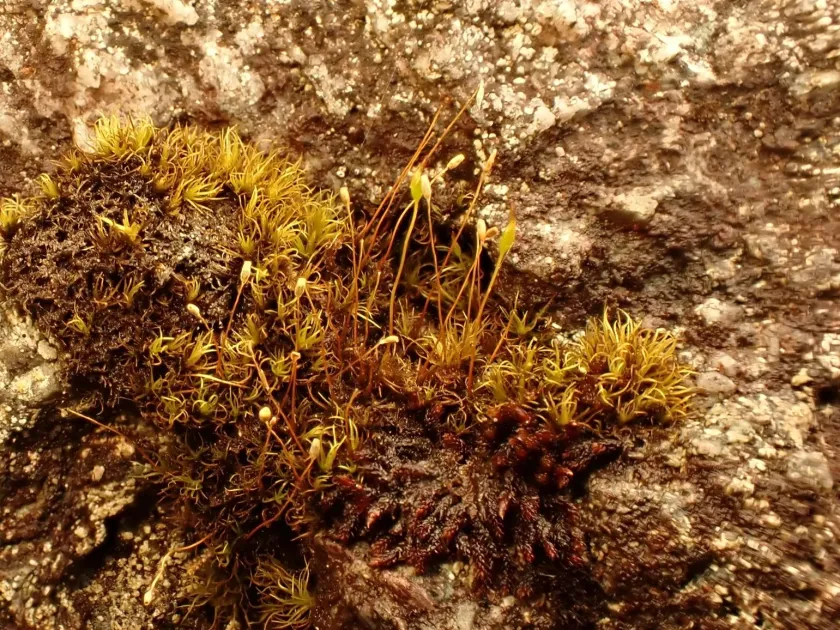
Description
Growing requirements
Kiaeria blyttii is a perennial acrocarpous moss belonging to the Dicranaceae family. While it is not classified as an agricultural crop, this bryophyte plays a vital role in the succession and stabilization of soil in alpine and arctic ecosystems.
The distribution of this species is largely circumpolar, extending into high-altitude mountain ranges. It thrives in cold, moist environments, typically colonizing acidic rock surfaces, boulders, and crevices where moisture accumulates but drainage is efficient.
Botanically, the plant grows in dense, dark green or brownish tufts. Its leaves are narrow, lanceolate, and often falcate-secund, which allows the plant to capture moisture from fog and melting snow. These structures are adapted to endure freezing temperatures throughout the year.
Regarding environmental requirements, Kiaeria blyttii is strictly confined to acidic substrates. It lacks the physiological mechanisms to tolerate basic or alkaline environments, making it a specialist species that rarely competes with calciphilous flora.
Cultivation of this moss is not practiced in agriculture due to its slow growth rates and extreme sensitivity to microclimate deviations. Its ecological value is primarily linked to its role in the pioneering stages of soil formation in barren landscapes.
Main diseases and pests
Climate change poses the most significant threat to Kiaeria blyttii populations globally. The retreat of glaciers and warming trends in high latitudes disrupt the stable, cold environment required for this moss to maintain its competitive advantage over other flora.
Atmospheric pollution remains a critical factor for the health of bryophytes. As they absorb nutrients and water directly from the air, high levels of sulfur dioxide and heavy metals can lead to the rapid decline and death of localized colonies.
Human disturbance, including recreational activities in alpine areas, causes mechanical damage to the fragile tufts. Because the regeneration rate of Kiaeria blyttii is exceptionally slow, damaged sites may take decades to fully recover.
Increased competition from vascular plants as treelines rise in response to warmer temperatures represents a long-term threat. These larger plants can shade out the moss, depriving it of the direct light and specific moisture levels it requires for photosynthesis.
While the species is generally resilient to cold, sudden fluctuations in precipitation or unseasonably warm weather patterns can trigger decay within the dense mats, as the lack of a protective cuticle makes it susceptible to fungal pathogens under high humidity.