
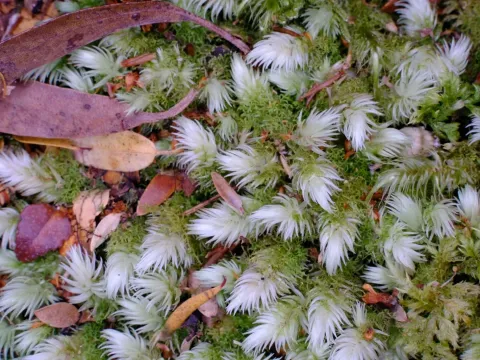
Leucobryum
Leucobryum
Leucobryum is a genus of mosses belonging to the Leucobryaceae family. These plants are widely recognized for their ability to grow in compact, dome-shaped cushions, which has earned them the common name of "cushion moss" among horticulturists and enthusiasts.
What the section contains


Leucobryum
The native distribution of Leucobryum spans across the temperate and tropical regions of the Northern Hemisphere. They typically colonize damp, shaded forest floors, decaying logs, and the bases of trees, thriving in environments characterized by high moisture and stable temperatures.
Leucobryum has strict requirements for its habitat, primarily focusing on humidity and acidity. Because these mosses lack a traditional root system, they must absorb moisture and nutrients directly through their leaf surfaces, making them highly sensitive to ambient humidity levels.
Soil requirements for the cultivation of this moss involve maintaining a consistently acidic pH. In agricultural or horticultural settings, creating a substrate that mimics its natural forest floor habitat—composed of peat, acidic bark, or specialized moss mixes—is essential for long-term health.
Botanically, the leaves of Leucobryum are uniquely structured, containing layers of hyaline (clear) cells. These cells act as water-storage reservoirs, allowing the moss to survive through periodic dry spells by slowly releasing stored moisture as needed.
The commercial use of Leucobryum is focused on the floral and landscape design industries. Its velvet-like texture and glaucous green color make it a highly sought-after material for interior decoration, specifically for green walls, terrariums, and artistic floral compositions.
Harvesting techniques involve the careful removal of intact cushions from the substrate. Sustainable harvesting practices are crucial, as they ensure that a portion of the colony remains in situ, allowing the population to recover and regenerate over time.
Post-harvest processing involves cleaning the moss of debris, such as pine needles or leaves. Professional floral supplies often include stabilized Leucobryum, which has been treated with humectants like glycerin to maintain its flexibility and aesthetic appeal for years without maintenance.
In landscape gardening, this moss is used to create low-maintenance ground covers in shaded corners of woodland or Japanese-style gardens. Its slow growth rate is highly valued, as it keeps the aesthetic appearance neat and requires minimal pruning or manual intervention.
Storage of harvested moss requires a controlled environment with high humidity. Without proper care, the moss can quickly dehydrate, lose its characteristic color, and become brittle, significantly reducing its value as a decorative product.
The main threats to Leucobryum vitality are linked to improper lighting and moisture regimes. Exposure to direct, intense sunlight can cause pigment degradation and severe desiccation, resulting in permanent damage to the delicate moss tissues.
Fungal pathogens and mold represent a significant risk when cultivating the moss in closed systems like terrariums. High humidity combined with poor air circulation creates the ideal environment for fungi to thrive and degrade the cushions within a short timeframe.
Water quality is another critical factor. The use of hard water, which often contains lime or other minerals, increases the pH of the substrate. Since Leucobryum is an obligate acidophile, such changes in chemistry often lead to chlorosis and stunted growth.
Small invertebrates, including soil mites and certain nematodes, can act as pests that feed on the moss tissues. Regular monitoring is essential, particularly in greenhouse production, to prevent infestation and ensure the quality of the final product.
Environmental pressure due to over-harvesting from wild populations is a growing concern. As a result, many producers are shifting toward controlled greenhouse cultivation to ensure a steady, sustainable supply of high-quality moss without depleting wild resources.