
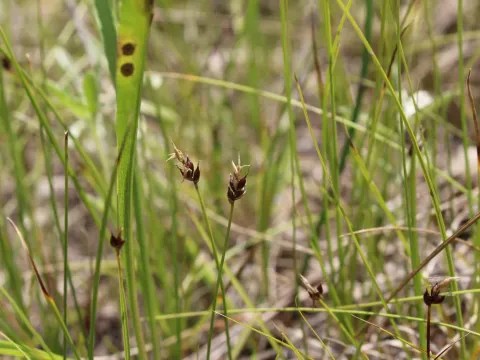
Blunt sedge
Carex obtusata
Blunt sedge (Carex obtusata) is a perennial herbaceous plant belonging to the Cyperaceae family. It is a low-growing species that spreads efficiently through a network of rhizomes, allowing it to colonize dry and open habitats where moisture is often a limiting factor.
What the section contains
Blunt sedge
The native range of the species encompasses the steppe and forest-steppe zones of Eurasia and North America. It is exceptionally well-adapted to continental climates characterized by hot summers and cold winters, showing strong resistance to drought and environmental stress.
The culture thrives in well-drained, porous soils, including rocky or sandy slopes. Unlike many other sedge species, it prefers dry terrestrial habitats and does not tolerate waterlogging, making it a distinct vegetation component in upland grasslands.
Agronomic management of blunt sedge focuses on its role in stabilizing rangelands. Because it is highly tolerant to grazing, it is considered a hardy species that can persist in ecosystems where the soil is prone to erosion and nutrient depletion.
Agricultural use is primarily linked to livestock production in arid and semi-arid regions. Blunt sedge provides valuable early-season grazing forage, offering essential nutrients when other forage species are still dormant or have yet to emerge.
Common plant health threats include fungal infections, specifically rusts, which can negatively affect the foliage quality during humid spells. While usually mild, significant outbreaks may reduce the palatability of the pasture.
Pest pressure is generally low, but certain species of soil-dwelling insects can damage the rhizome structure if the soil becomes excessively loose or degraded. Maintaining stable plant cover is the primary method of preventing widespread damage.