
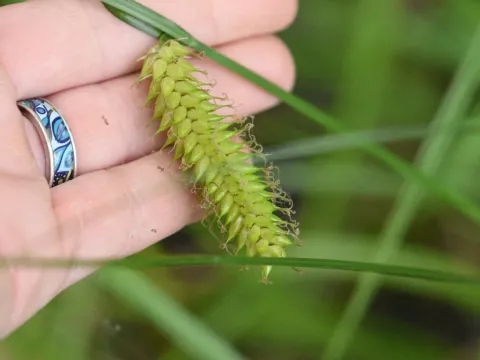
Bladder sedge
Carex vesicaria
Bladder sedge (Carex vesicaria) is a perennial herbaceous plant belonging to the Cyperaceae family. It is a widely distributed hydrophyte found in marshes, riverbanks, and wet meadows throughout the temperate regions of the Northern Hemisphere.
What the section contains
Bladder sedge
The plant features a creeping rhizome system, which allows it to form dense mats in waterlogged soils. It thrives in clay and peat-rich substrates, demonstrating excellent tolerance for high soil acidity and prolonged water saturation levels.
Climatically, Carex vesicaria is adapted to cold winters and moderate to high humidity. It requires full sunlight to develop fully and can withstand seasonal flooding where water levels reach up to 50 centimeters above the surface.
Botanically, it is characterized by triangular stems and large, inflated perigynia (the bladder-like structures containing the fruit). This unique structure facilitates seed dispersal via water, which is its primary method of colonizing new habitats.
In terms of cultivation, it is highly suitable for agricultural lands that are too wet for conventional cereal crops. It serves as a natural stabilizer for soils susceptible to flooding, preventing degradation and erosion.
The agricultural utility of bladder sedge primarily involves its role as a source of biomass. Although its nutritional quality is lower than that of standard forage grasses, it remains a valuable option for wetlands where other crops fail.
Yields typically range between 4 to 6 tonnes per hectare of dry biomass. The nutritional value peaks during the early stages of development, prior to the lignification of the stems, making early harvest critical for livestock feeding.
Beyond animal fodder, the plant has potential as an industrial feedstock. Due to its fiber content, it has been explored for the production of sustainable packaging, biofuels, and as a component in organic soil amendments.
It is also a significant species for environmental engineering. Its ability to absorb nutrients from water makes it a candidate for constructed wetlands designed to treat agricultural runoff and improve water quality.
Strategic management of harvesting schedules can optimize both the quantity and quality of the biomass produced. Regular mowing promotes vigorous regrowth, ensuring sustainable production across multiple growing seasons.
Carex vesicaria is generally hardy, but it is susceptible to various fungal pathogens, especially in stagnant water conditions. Rust fungi represent the most frequent threat, affecting the leaves and reducing photosynthetic efficiency.
Insect pests, including specific types of moths and beetles, can cause damage to the reproductive structures. These pests are particularly problematic when trying to harvest seeds for the propagation of the culture.
Dense clusters of sedge are susceptible to mold and decay in excessively humid and warm conditions. Proper ventilation and appropriate stand density are crucial to prevent the onset and spread of these fungal infections.
Integrated pest management, focusing on cultural practices rather than chemicals, is recommended to preserve the local wetland ecosystem. This includes periodic harvesting to remove dead foliage that may harbor pathogens.
Monitoring for signs of infestation is essential, especially during the spring growth phase. Early detection allows for targeted management practices, such as localized mowing or water level adjustments, to curb the spread of threats.