
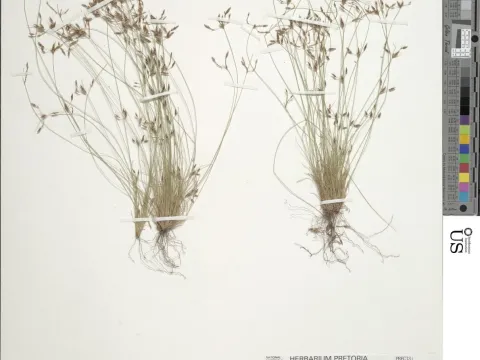
Bulbostylis humilis
Bulbostylis humilis
Bulbostylis humilis is a significant member of the Cyperaceae family, often found in tropical environments where it adapts to seasonal environmental shifts.
What the section contains
Bulbostylis humilis
Propagation typically relies on seeds that have evolved to withstand periods of drought, germinating efficiently once moisture levels stabilize in the soil.
For cultivation purposes, sowing should be timed to align with the early stages of the rainy season to ensure that moisture is readily available for initial root development.
The seeds are relatively small and should be sown shallowly, ideally at a depth of 1-2 centimeters, to allow adequate light penetration for emerging sprouts.
Uniform soil temperature, maintained within a comfortable range of 20 to 25 degrees Celsius, is essential for accelerating the germination process and ensuring high seedling vigor.
This crop thrives in well-lit, sunny areas with sandy or loamy soils, which prevent the build-up of excess moisture and encourage deeper root penetration.
The plant demonstrates high tolerance to drought stress, making it an excellent candidate for regions where water resources are inconsistent throughout the year.
Soil pH levels should ideally remain in the slightly acidic to neutral range, facilitating the uptake of essential nutrients necessary for vegetative growth.
Abundant sunlight is a critical requirement for this species, as restricted light conditions often lead to stunted development and reduced reproductive output.
Balanced fertilization, particularly with an emphasis on potassium and phosphorus, supports the structural integrity of the plant during the maturation phases.
Fungal pathogens represent the most significant threat to the health of the plant, especially in environments characterized by high humidity and poor air circulation.
Insect pests, including aphids and mite species, can cause substantial damage to the foliage, thereby inhibiting the plant's ability to undergo photosynthesis efficiently.
Root rot remains a prevalent issue when soil drainage is insufficient, often leading to rapid decline in plant health and overall yield loss.
Integrated pest management strategies are recommended, focusing on early detection and the use of preventative cultural practices to maintain a healthy crop.
Regular maintenance, including weeding and thinning of the stands, helps ensure that plants receive adequate resources and minimizes the spread of potential pathogens.