
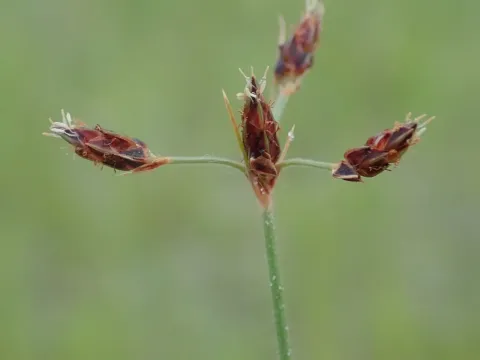
Bulbostylis hispidula
Bulbostylis hispidula
Bulbostylis hispidula, belonging to the Cyperaceae family, is a perennial sedge often found in tropical and subtropical grasslands. When introducing this crop to agricultural lands, success depends on simulating the onset of the rainy season, as the plant requires sufficient moisture for seed germination.
What the section contains
Bulbostylis hispidula
Sowing should occur when the soil temperature consistently exceeds 20°C. Due to the minute size of the seeds, they should be sown on the surface or buried at a depth of no more than 0.5 cm, as deeper placement often prevents the emergence of sprouts.
Effective establishment requires a well-tilled, weed-free seedbed. In larger areas, professional broadcasting or precision drilling is recommended, followed by light compaction to ensure contact between the seeds and the soil matrix, which is vital for moisture uptake.
Growth rate during the first few weeks is typically slow, as the plant directs its energy toward establishing a robust root system. During this period, weed control is essential, as the young seedlings of Bulbostylis hispidula are easily outcompeted by aggressive weeds.
Density levels should be adjusted based on the intended purpose. High-density planting is ideal for soil stabilization and preventing erosion, while lower densities may be preferred if the plant is being integrated into a diverse grazing system for livestock.
This species is highly adaptable to poor, acidic, and sandy soils, making it a valuable candidate for reclaiming marginal land where other crops fail. It thrives in well-drained environments and is sensitive to prolonged waterlogging.
Sunlight is a key requirement, as Bulbostylis hispidula does not tolerate shade. For maximum biomass production, it should be grown in open fields that receive full daily exposure to solar radiation, which facilitates photosynthesis.
The plant demonstrates significant tolerance to periods of drought due to its deep and fibrous root system. However, in an agricultural setting, supplementary irrigation during the peak growth phase will lead to higher yields of vegetative matter.
Soil management should prioritize maintaining structural integrity. Incorporating phosphorus-rich amendments prior to planting supports initial root development, while minimal nitrogen application is sufficient to maintain steady growth without excessive soft tissue production.
Maintenance practices involve simple field cleaning and occasional tilling to aerate the soil. Because of its resilient nature, it requires fewer chemical inputs compared to traditional row crops, making it a sustainable choice for certain low-input systems.
The main threats to the health of these sedge stands include root-attacking fungi triggered by excessive soil moisture and poor drainage. Ensuring that fields are sloped or properly leveled can prevent the standing water that facilitates such infections.
Pests such as soil-dwelling larvae and aphids can cause damage. Integrated pest management, including the use of pheromone traps and biological predators, is highly effective for maintaining the health of the crop without relying exclusively on synthetic pesticides.
Leaf spot diseases can occur under conditions of high humidity combined with stagnant air. Providing adequate spacing between plants allows for improved airflow, which significantly reduces the risk of fungal proliferation within the crop canopy.
Monitoring the field for signs of early chlorosis is important. This symptom often indicates nutrient imbalances or the presence of root-knot nematodes, which are a common challenge in tropical sedge cultivation and require appropriate soil treatment.
- Root rot pathogens (Rhizoctonia spp.).
- Aphids and sucking insects.
- Soil-dwelling larvae (grubs and wireworms).
- Leaf spot pathogens.