
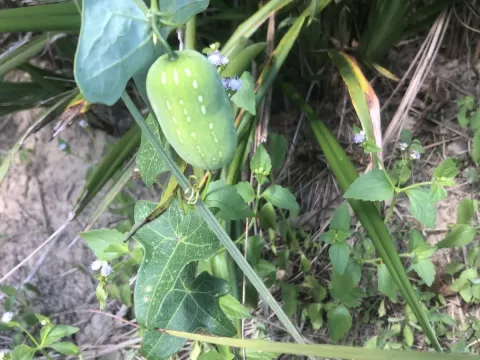
Melothria amplexicaulis
Melothria amplexicaulis
Melothria amplexicaulis is a tropical vine that requires a controlled approach to propagation in temperate regions. Seeds should be sown indoors in pots about four to six weeks before the last frost date to ensure strong plant development.
What the section contains
Melothria amplexicaulis
The growing medium must be well-draining and nutrient-rich, with a slightly acidic to neutral pH. Maintaining a consistent temperature between 22 and 26 degrees Celsius is critical for high germination rates.
Seedlings are ready for transplanting once the soil has warmed up and all risks of frost have passed. Handle the root system carefully during the transfer to avoid transplant shock, which can delay growth significantly.
Planting in rows requires adequate spacing of at least 50 centimeters. Since this plant is a climber, preparing sturdy trellises or vertical netting before planting is essential for its structural support.
Pinching the growing tips of the main vines once the plant establishes itself encourages lateral branching, which increases the surface area for flowering and maximizes the potential fruit yield.
As a member of the Cucurbitaceae family, this species thrives in warm and humid environments. It requires significant exposure to sunlight to develop properly and produce an abundance of fruit throughout the season.
Climate management is crucial; the plant prefers temperatures ranging from 20 to 30 degrees Celsius. Temperatures dropping below 15 degrees Celsius can cause growth to stall and increase susceptibility to diseases.
The soil should be fertile and enriched with organic matter, such as well-rotted compost. Good drainage is vital, as Melothria is intolerant of waterlogged soil, which leads to root decay and nutrient uptake issues.
Watering must be consistent and frequent, especially during the flowering and fruit-setting stages. Avoid overhead watering to prevent leaf diseases, focusing instead on applying water directly to the base.
Applying a balanced liquid fertilizer every two weeks during the peak growing phase helps sustain the vigorous growth of the vine and ensures the production of high-quality, succulent fruits.
The fruit of Melothria amplexicaulis is a small, oval berry resembling a miniature cucumber. Harvest begins approximately 60 to 80 days after transplanting, depending on the local environmental conditions.
High yields are achievable if the vine is grown in optimal conditions with adequate space for climbing and proper pollination. The plant remains productive until the weather turns cold in the autumn.
Fruit set relies heavily on pollinator activity. If grown in a greenhouse, manual pollination using a small brush may be necessary to ensure that every flower develops into a viable fruit.
Frequent harvesting encourages the vine to divert energy into forming new flowers rather than maturing seeds. Regular picking is therefore a key agronomic strategy to boost the overall output of the plant.
The harvest remains high-quality for a short period, as the fruits are delicate and thin-skinned. Proper handling during collection is necessary to prevent bruising and to maintain a long shelf life.
Powdery mildew is the most common threat to this vine, particularly in regions with high humidity or poor air circulation. It appears as a white, dusty growth on the leaf surface, reducing photosynthesis.
Spider mites often attack the vine during hot and dry spells. These tiny pests cause yellow stippling on leaves and can lead to severe defoliation if left untreated for an extended period.
Aphids can colonize new shoots and flower buds, weakening the plant by draining its sap and potentially transmitting various viral diseases that are difficult to manage in cucurbit crops.
Root rot caused by soil-borne fungi is a significant risk in poorly drained beds. Proper sanitation and avoiding excessive watering are the best preventative measures against these pathogens.
Integrated pest management, including the use of neem oil or biological controls, is highly recommended to manage outbreaks while maintaining the fruit's suitability for human consumption.
The fruit should be harvested when it is firm and before the seeds inside become hard. At this stage, the fruit is most palatable and maintains the characteristic crunch desired in culinary applications.
Using pruning shears or a sharp knife is necessary for clean harvesting. Removing fruits by pulling them manually often tears the vine, causing irreversible damage to the fragile stems.
Harvesting is best conducted in the early morning hours. This timing ensures that the fruit is crisp and fully hydrated, which contributes to better texture and a longer shelf life after being gathered.
Once harvested, the fruits should be stored in a cool, ventilated area away from direct sunlight. They can typically be kept in a refrigerator for up to a week before the skin begins to wrinkle.
In culinary use, these fruits are versatile. They are frequently pickled as a gourmet snack or used raw in fresh salads to provide a unique, subtle cucumber-like flavor with a pleasant texture.