
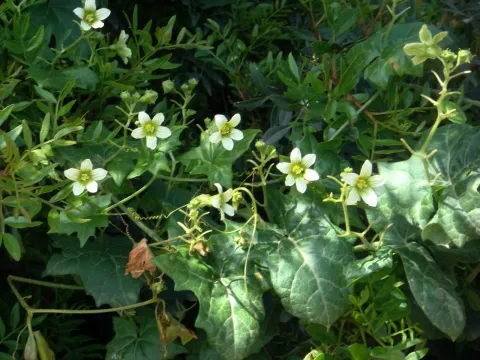
Marble bryony
Bryonia marmorata
Marble bryony (Bryonia marmorata) belongs to the Cucurbitaceae family. It is a perennial herbaceous vine that propagates primarily through seeds or vegetatively via its tuberous roots.
What the section contains
Marble bryony
Sowing in open ground should be carried out in spring, once the soil has warmed up to at least 12-15 degrees Celsius. The ideal period generally falls between late April and May, depending on the specific climate zone.
To accelerate germination, it is recommended to soak the seeds in a growth stimulant for 12–24 hours before planting. Seeds should be sown at a depth of 2–3 centimeters, maintaining a spacing of 50–70 centimeters between individual plants.
For greenhouse or early-season cultivation, seedlings are started in peat pots 3–4 weeks before being moved to their permanent location. This practice allows the plant to establish a strong root system before the onset of the peak growing season.
The plant demonstrates vigorous climbing behavior, necessitating the use of vertical supports or trellises. Bryonia utilizes its tendrils to secure itself, which improves air circulation and ensures optimal light exposure across the entire foliage.
This crop thrives in sunny, well-lit locations that are sheltered from strong winds. While it can tolerate partial shade for short periods, full sun is essential for the development of healthy fruits and the accumulation of secondary metabolites in the roots.
Soil requirements focus on high drainage and aeration. The plant performs best in light, fertile sandy or loamy soils with a neutral to slightly alkaline pH. Heavy, waterlogged soils are detrimental and should be avoided to prevent root diseases.
Water management is critical; while the plant requires regular irrigation during drought periods, it cannot withstand stagnant water in the root zone. Proper drainage systems should be implemented in areas prone to excessive precipitation.
Agricultural maintenance involves regular weeding and loosening of the topsoil, especially during the early growth stages. Incorporating organic matter, such as well-rotted compost, into the soil profile significantly improves both the vegetative yield and root development.
In temperate climates, the root system requires protection during winter. Applying a 10–15 centimeter layer of mulch, such as straw, peat, or dry leaves, over the root zone helps protect the tuber from freezing temperatures.
The primary utility of marble bryony lies in pharmaceutical applications and ornamental landscaping. Proper nitrogen-rich fertilization during the active growth phase can lead to significant biomass production, which is essential for raw material harvesting.
The roots are the most valuable part of the plant, often harvested for their glycoside and alkaloid content, which are utilized in specialized medical preparations. Harvesting is typically conducted at the end of the season once the foliage begins to die back.
Productivity is highly dependent on environmental conditions, particularly the ratio of sunlight to humidity during the mid-summer months. Excessive moisture during the final stages of growth can negatively impact the chemical composition and quality of the roots.
Ornamental value is derived from the uniquely patterned, marble-like fruits. These are harvested before the first frost for use in dried floral arrangements and interior decor, as they retain their structure and appearance for an extended duration.
The economic viability of growing Bryonia marmorata is favorable for niche markets, particularly those focusing on homeopathic raw materials. A well-managed plot can yield significant quantities of seeds and roots per hectare.
The two-spotted spider mite is one of the most significant pests for this species, especially in hot and dry climates. These mites feed on the underside of leaves, leading to yellowing, necrosis, and eventual loss of photosynthetic capacity.
Powdery mildew is a common fungal disease identified by a white, flour-like coating on the foliage. Control measures include the application of sulfur-based fungicides or biological agents that effectively manage the fungus without harming beneficial insects.
Root rot, driven by persistent overwatering or poor soil drainage, remains a primary threat to plant longevity. Maintaining a balanced watering schedule and avoiding excessive moisture around the crown of the plant is vital for disease prevention.
Aphids can colonize the soft, succulent tips of the stems and are known vectors for various viruses that hinder plant development. Integrated pest management, involving the introduction of predators like ladybugs, is often more effective than chemical intervention.
Bacterial leaf spot is another concern, often surfacing during humid conditions. Symptoms include oily or dark-colored lesions on the leaves; in such cases, affected parts should be pruned, and the planting should be treated with copper-based sprays.