


Reference · Crops
Momordica
Momordica
Momordica seeds possess a hard, thick seed coat; therefore, scarification followed by pre-sowing soaking in a growth stimulant solution is highly recommended for faster germination.
2
items
What the section contains
Marketplace
Products in this section · 5


Momordica
Seeds should be sown in individual peat pots during early spring, as the plant is notoriously sensitive to root disturbance and does not tolerate traditional transplanting methods.
Maintaining a temperature range between +25°C and +28°C is critical for successful emergence, as cooler environments often lead to seed rot and uneven seedling development.
Transplanting into final locations, such as open fields or greenhouses, must only occur after the risk of frost has passed and the soil has reached consistent warmth.
Sufficient spacing, typically 60 to 80 centimeters between plants, is essential to allow for adequate airflow and vine development, reducing the risk of fungal outbreaks.
As a member of the Cucurbitaceae family, Momordica thrives in tropical climates, requiring high levels of solar radiation and protection from cold winds.
The ideal soil for this crop is a fertile, well-draining, and loose loam with a pH level ranging from neutral to slightly alkaline to ensure optimal nutrient uptake.
Regular irrigation is vital for growth, but growers must ensure excellent drainage, as waterlogged soil quickly causes root decay and systemic plant stress.
Being a vigorous vine, Momordica necessitates robust support structures or trellises to enable vertical growth, which improves fruit quality and ease of harvest.
The plants exhibit peak growth performance at temperatures between +20°C and +30°C, while exposure to temperatures below +15°C will severely stunt development.
Yield productivity is heavily influenced by the presence of pollinators, as Momordica is a cross-pollinating crop that requires insect activity or manual pollination.
Pruning lateral shoots and managing excessive foliage are standard agricultural practices to divert plant energy toward fruit development rather than purely vegetative growth.
Consistent fertilization with balanced NPK ratios, specifically increasing potassium and phosphorus during the flowering stage, significantly enhances fruit set and size.
Under controlled greenhouse conditions, a single well-maintained vine can yield between 10 to 20 fruits, assuming adequate nutrition and light levels are consistently provided.
The crop is highly valued for both its nutritional density and its medicinal compounds, making it a profitable niche product for specialty produce markets.
Downy mildew and various forms of root rot represent the primary pathological risks, particularly when humidity levels in the cultivation area are poorly managed.
Pests such as spider mites and melon aphids are common adversaries, often proliferating rapidly in hot and arid conditions if not monitored closely.
Strict adherence to crop rotation cycles is mandatory; Momordica should never be planted in soil recently occupied by other Cucurbit species like cucumbers or squash.
Integrated pest management strategies, utilizing both biological controls and precise environmental monitoring, are preferred over broad-spectrum chemical applications.
Early identification of pest populations on the underside of leaves allows for targeted intervention, which prevents widespread damage to the vine infrastructure.
Harvesting usually commences a few weeks after flowering; the timing is critical as fruits should be collected while they are firm and before seed maturation begins.
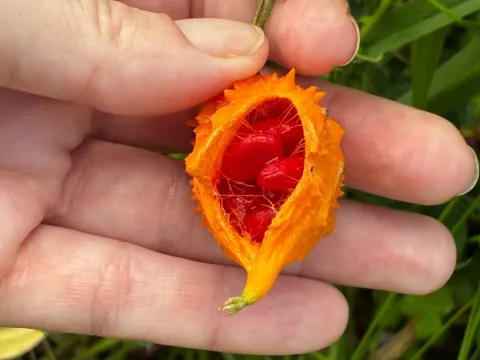
If left on the vine until biological maturity, the fruit skin often splits and reveals bright red arils, rendering the produce commercially unappealing and prone to spoilage.
Using a sharp pruning tool to detach the fruit minimizes damage to the delicate stems, allowing the plant to continue producing flowers throughout the growing season.
Freshly harvested produce has a relatively short shelf life and should be handled with care to prevent bruising during transit to the market or processing site.
Given the fruit's inherent bitterness, it is frequently treated through soaking or salting processes to align its culinary profile with consumer preferences.