
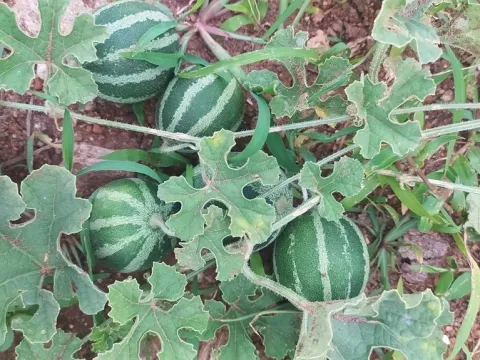
Cucumis trigonus
Cucumis trigonus
Cucumis trigonus is a wild species that requires warm conditions for successful germination, reflecting its evolutionary adaptation to arid climates.
What the section contains
Cucumis trigonus
Seeds should be sown in late spring or early summer when soil temperatures consistently exceed 20 degrees Celsius to ensure rapid emergence of seedlings.
Planting depth of about 2 to 3 centimeters is recommended, providing the seed with sufficient protection and access to moisture during the initial stage.
If starting in nursery trays, it is crucial to handle the seedlings with care, as Cucurbitaceae species often have sensitive root systems prone to shock.
The spacing between plants must be generous, as the vines are highly vigorous and will sprawl extensively across the ground if not provided with support.
As a member of the Cucurbitaceae family originating from dry environments, this species thrives in high temperatures and has significant drought resistance.
Full sun exposure is mandatory for Cucumis trigonus to achieve optimal vegetative growth and to stimulate the production of flowering nodes along the vines.
Soil requirements focus primarily on drainage; the plant does not tolerate waterlogged conditions, which can lead to fungal infections and root failure.
It prefers light, sandy, or well-aerated soils and demonstrates an impressive ability to thrive in soils with low fertility levels compared to domestic crops.
While tolerant of heat, the plant needs good air circulation to maintain its health, especially if grown in confined garden spaces or intensive cultivation.
Pests such as aphids and spider mites are the most common threats to the foliage, capable of causing significant damage in hot and dry weather conditions.
Powdery mildew represents a major threat when high humidity levels are present, appearing as white patches on the leaves and severely weakening the vine.
Root rot caused by water stagnation is a primary cause of mortality in cultivated samples, necessitating careful monitoring of irrigation frequency.
Downy mildew may also occur during periods of prolonged dampness, making it essential to keep the leaf surfaces as dry as possible through drip irrigation.
Integrated pest management, including natural predators and selective removal of infested plant parts, is the most effective approach for this resilient species.
Harvesting should be timed according to the intended use, keeping in mind that wild specimens may contain cucurbitacins which cause bitterness in the flesh.
Technically mature fruits are usually smaller than traditional cucumbers and often display distinct longitudinal stripes as they transition from green to yellow.
For seed production purposes, fruits must be allowed to ripen fully on the vine until the skin begins to harden and the internal seeds become mature.
If harvested for fresh consumption, careful selection is necessary to ensure the absence of extreme bitterness, a trait common in many wild Cucumis species.
Post-harvest handling requires dry and cool storage conditions, as the fruit's texture can degrade rapidly if exposed to moisture and warmth after being detached.