
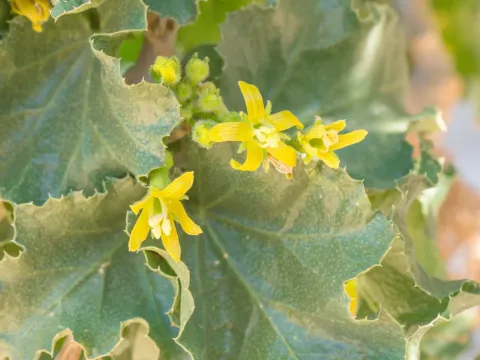
Dendrosicyos
Dendrosicyos
Dendrosicyos socotrana, commonly known as the cucumber tree, is the only tree-like member of the Cucurbitaceae family, endemic to the island of Socotra. Unlike typical vines, this species has developed a thick, barrel-shaped trunk that acts as a water storage organ.
What the section contains

Dendrosicyos
The plant is a succulent and has strict light requirements. Successful growth requires intense, direct sunlight to ensure the proper development of its massive trunk and the formation of robust, leathery leaves.
Dendrosicyos prefers rocky, well-draining substrates. Waterlogging in the root zone is fatal, so the growing medium must be highly porous to air and water, mimicking the natural conditions of the limestone plateaus where it originates.
Temperature requirements correspond to a subtropical and tropical climate. The plant does not tolerate sudden cold snaps or freezing temperatures, necessitating greenhouse or protected cultivation in non-native environments.
Agronomic management involves minimal watering, especially during the dormancy period. Maintaining a balance between infrequent irrigation and dry spells is crucial, as the plant is adapted to extreme aridity.
The primary threats to the plant are root rots caused by improper irrigation regimes and excessive soil moisture. Fungal infections can spread rapidly through the succulent tissues of the trunk.
Pests such as spider mites or mealybugs can attack young shoots and leaves. Regular monitoring of the plants helps in early detection of infestations and the application of appropriate protective measures.
Poor ventilation in greenhouse conditions promotes the reproduction of harmful insects and the development of pathogenic microorganisms. Consistent air circulation is critical for the health of the species.
Mechanical damage to the trunk can lead to bacterial infections, as the tissues of Dendrosicyos are rich in moisture and sugars. Any wounds must be treated promptly with fungicides.
Environmental changes and overgrazing in its natural habitat threaten the wild population, making ex-situ conservation and propagation in botanical gardens essential for the species' survival.