
Reference · Crops
Cucumber
Cucumis L.
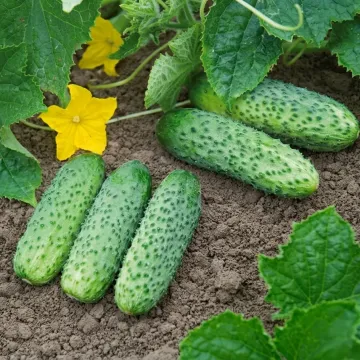
Cucumber belongs to the Cucurbitaceae family and is one of the most widely cultivated vegetable crops globally, suitable for both greenhouse and field production.
17
items
What the section contains
 Cucumber
Cucumis sativus L.
752 products
Cucumber
Cucumis sativus L.
752 products
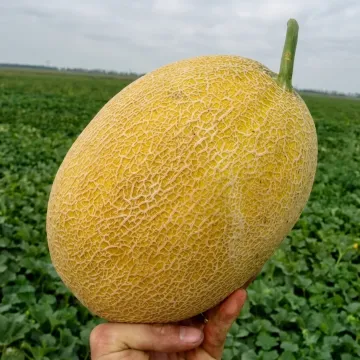
 Melon
Cucumis melo L.
382 products
Melon
Cucumis melo L.
382 products
 West Indian gherkin
Cucumis anguria L.
1 product
West Indian gherkin
Cucumis anguria L.
1 product
 African cucumber
Cucumis africanus L. f.
African cucumber
Cucumis africanus L. f.
 Armenian cucumber
hybrids between Cucumis melo L. subsp. melo var. flexuosus (L.) Naudin and Cucumis melo L. subsp. melo
Cantaloupe
Cucumis melo L. subsp. melo var. cantalupo Ser.
Cucumber
Cucumis sativus L. var. sativus
Armenian cucumber
hybrids between Cucumis melo L. subsp. melo var. flexuosus (L.) Naudin and Cucumis melo L. subsp. melo
Cantaloupe
Cucumis melo L. subsp. melo var. cantalupo Ser.
Cucumber
Cucumis sativus L. var. sativus
 Cucumis ficifolius and Cucumis myriocarpus hybrids
hybrids between Cucumis ficifolius and Cucumis myriocarpus Naudin
Cucumis ficifolius and Cucumis myriocarpus hybrids
hybrids between Cucumis ficifolius and Cucumis myriocarpus Naudin
 Cucumis hirsutus
 Sond.
Dudaim melon
Cucumis melo L. subsp. melo
Dudaim melon
Cucumis melo L. subsp. melo var. flexuosus (L.) Naudin
Cucumis hirsutus
Cucumis hirsutus Sond.
Dudaim melon
Cucumis melo L. subsp. melo
Dudaim melon
Cucumis melo L. subsp. melo var. flexuosus (L.) Naudin
 Fig-leaved cucumber
Cucumis ficifolius A. Rich.
Hybrid of Cucumis anguria and Cucumis ficifolius
Hybrids between Cucumis anguria L. and Cucumis ficifolius A. Rich
Hybrid of Cucumis hirsutus and Cucumis metuliferus
Cucumis hirsutus x C. metuliferus
Fig-leaved cucumber
Cucumis ficifolius A. Rich.
Hybrid of Cucumis anguria and Cucumis ficifolius
Hybrids between Cucumis anguria L. and Cucumis ficifolius A. Rich
Hybrid of Cucumis hirsutus and Cucumis metuliferus
Cucumis hirsutus x C. metuliferus
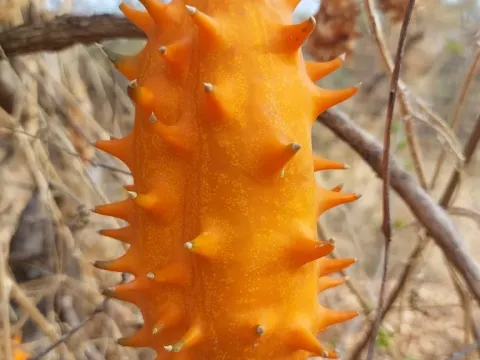
 Kiwano
Cucumis metuliferus E. Mey. ex Naudin
Makuwa melon
Cucumis melo L. var. makuwa Makino
Kiwano
Cucumis metuliferus E. Mey. ex Naudin
Makuwa melon
Cucumis melo L. var. makuwa Makino
 Myriocarpa cucumber
Cucumis myriocarpus Naudin
Myriocarpa cucumber
Cucumis myriocarpus Naudin
Marketplace
Products in this section · 12


Биоорганическое нано удобрение "НАГРО" / "NAGRO"
LLC NPO "BIOPLAN"
Fertilizers
43
25
1 offer
37.63 €per 1 kg
Buy





Cucumber
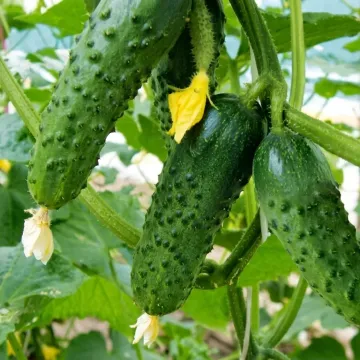
The sowing process requires warm soil, ideally above 15 degrees Celsius, to ensure rapid and uniform germination of the seeds in open field conditions.
In temperate climates, many growers prefer starting seeds in trays indoors to transplant seedlings after the danger of frost has passed, gaining a head start.
Proper spacing is essential for air circulation, which prevents the build-up of moisture around the foliage and reduces the incidence of fungal diseases.
The selection of the hybrid variety should be based on the specific growing environment, such as greenhouse-specific cultivars or open-field varieties.
Cucumbers are sensitive to cold and require high temperatures to thrive, with optimal daytime growth occurring between 20 and 30 degrees Celsius.
Well-drained, fertile soil rich in organic matter is crucial for successful cultivation, as the plant demands significant nutrients for its fast development.
Consistent moisture is key; the plant should never experience prolonged drought, as this leads to misshapen fruits and a bitter taste in many cultivars.
Light intensity plays a major role in photosynthesis, so choosing a sunny location or providing supplemental lighting in greenhouses is a standard practice.
Applying balanced fertilizers, particularly those with higher potassium content during the fruiting phase, significantly improves yield and fruit shelf life.
High yields depend on maintaining plant health through proper pruning and training, which encourages the plant to allocate energy to fruit development.
Vertical training systems, such as trellising, not only maximize space but also improve fruit quality by keeping them off the ground and clean.
Parthenocarpic hybrids are highly productive because they do not require insect pollination to set fruit, making them ideal for protected cropping environments.
Managing the vine by removing unproductive side shoots ensures that the primary energy flow supports the existing fruits rather than vegetative growth.
Uniform irrigation schedules prevent growth spurts and checks, which are the main causes of fruit splitting and physical deformation.
Powdery mildew is a major concern in cucumber production, often manifesting as white spots on the leaves and eventually reducing the plant's overall vigor.
Pests like spider mites and aphids are notorious for colonizing the undersides of leaves, requiring vigilant scouting and timely intervention.
Downy mildew and various root rots pose significant risks in high-humidity environments, making proper ventilation an essential management strategy.
Integrated Pest Management (IPM) practices, including the use of beneficial insects, are encouraged to keep pest populations below the economic threshold.
Crop rotation is fundamental to prevent soil-borne pathogens, as consecutive planting of cucurbits can lead to a build-up of specialized soil diseases.
Frequent harvesting is necessary to prevent fruit from becoming overly large and seedy, which signals the plant to slow down its fruit production.
Harvesting should be done using a sharp tool to avoid damaging the vine, as stems are quite delicate and prone to breaking if fruits are pulled.
Early morning harvest is recommended to ensure fruits are fully hydrated and crisp, providing the best quality for immediate consumption or sale.
Post-harvest handling involves placing the cucumbers in a cool, ventilated area to avoid chilling injury while keeping them away from ethylene sources.
Grading for size and appearance immediately after harvest allows for better market presentation and helps in achieving higher price premiums.