
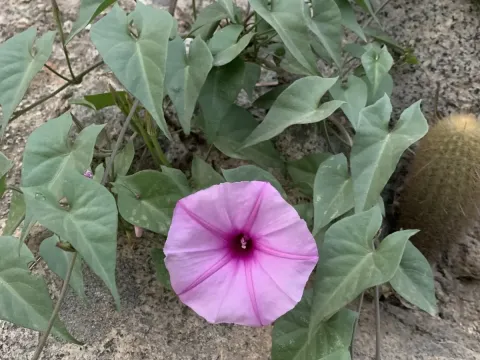
Pink morning glory
Ipomoea incarnata
Ipomoea incarnata, commonly known as the pink morning glory, is a perennial flowering vine belonging to the Convolvulaceae family. It is known for its trailing growth habit and delicate, trumpet-shaped flowers.
What the section contains
Pink morning glory
Seeds should be sown in late spring once the danger of frost has passed. Planting in warm soil is essential for successful germination and early establishment of the root system.
To improve germination rates, it is recommended to scarify the seeds or soak them in lukewarm water for several hours prior to planting in the garden soil.
When starting indoors, seeds should be placed in biodegradable pots to minimize root disturbance during the transplanting process into their permanent location.
The plant grows rapidly during the summer months, and providing consistent spacing ensures that the vines do not become overcrowded, promoting better airflow.
This species thrives in full sun exposure. While it can tolerate partial shade, maximum flowering intensity is achieved with at least six to eight hours of direct sunlight daily.
Well-drained, fertile soil is required for optimal growth. The plant is adaptable but performs best in loamy soil enriched with organic compost or well-rotted manure.
Regular watering is necessary, especially during dry spells. However, it is vital to ensure that the soil remains moist but never waterlogged to avoid root rot.
As a vigorous climber, Ipomoea incarnata requires a robust trellis, fence, or other structure to support its growth. Proper training helps direct the vines effectively.
Fertilization with a balanced, water-soluble fertilizer can support blooming; however, excessive nitrogen should be avoided as it encourages foliage growth at the expense of flowers.
Common pests include aphids and spider mites, which can sap the energy from the vine and cause leaves to curl or yellow during the peak of the growing season.
Fungal issues, such as powdery mildew, may occur if the foliage remains wet for extended periods or if air circulation around the plant is insufficient.
Integrated pest management, including the use of neem oil or insecticidal soaps, is recommended at the first sign of pest infestation to maintain plant health.
Practicing good sanitation, such as removing fallen leaves and pruning dead or diseased vines, significantly reduces the likelihood of recurrent pathogen outbreaks.
Regular monitoring of the plant's health allows for quick identification of issues, ensuring that the pink morning glory remains a vibrant part of the landscape.