
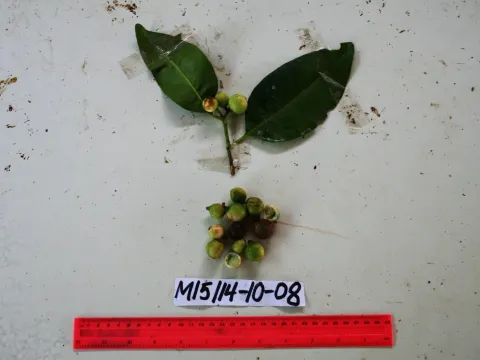
Garcinia cymosa
Garcinia cymosa
Garcinia cymosa is a member of the Clusiaceae family, native to the humid tropical regions of Southeast Asia. This evergreen tree is adapted to dense forest environments where high rainfall and stable temperatures are persistent throughout the year.
What the section contains
Garcinia cymosa
Optimal growth of this crop requires a tropical climate with temperatures strictly maintained above 20 degrees Celsius. Exposure to cold winds or temperatures dropping below the comfort zone can lead to severe physiological stress and leaf drop.
The soil requirements for Garcinia cymosa involve deep, well-drained loamy soils rich in organic matter. A neutral to slightly acidic pH is ideal for nutrient uptake, and maintaining soil aeration is critical to support the sensitive root system.
Botanically, the species is characterized by thick, glossy leaves and a symmetrical canopy structure. Agronomic management focuses on mimicking its natural understory environment during the initial stages of establishment in nurseries or plantations.
The economic value of this tree is largely derived from its potential applications in medicinal research and local traditional forestry. Further cultivation trials are necessary to determine optimal spacing and fertilization rates for plantation settings.
Fungal leaf spot diseases represent the primary threat to Garcinia cymosa plantations, especially in high-humidity areas. These pathogens proliferate when air circulation within the canopy is insufficient, leading to rapid foliage damage.
Pests such as mealybugs and scale insects are common adversaries that feed on the sap of young stems. Integrated pest management strategies, including biological control agents and localized chemical treatments, are recommended for effective mitigation.
Root rot caused by Phytophthora species is a major concern when irrigation management is poor or drainage is inadequate. Ensuring that the soil does not remain waterlogged is the most effective preventative measure against these infections.
Environmental stress, such as direct exposure to harsh tropical sun during the early years, can cause leaf chlorosis and stunted development. Protective shading is highly recommended for younger trees until they develop a robust canopy.
Regular monitoring for boring insects is essential, as these pests can compromise the structural integrity of the trunk. Pruning to maintain an open canopy architecture helps in reducing moisture accumulation and prevents the onset of secondary infestations.