
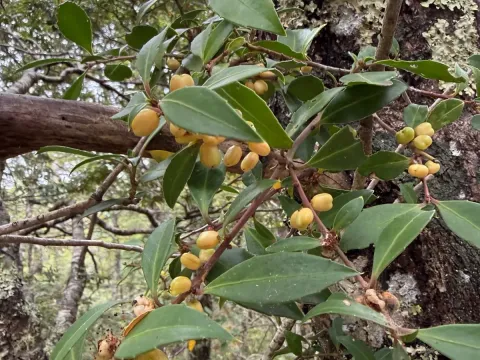
Maytenus
Maytenus
Maytenus is a genus of evergreen trees and shrubs belonging to the Celastraceae family. Native to tropical and subtropical regions of the Americas, Africa, and Asia, these plants are highly valued for their medicinal properties. The most famous species, Maytenus ilicifolia, is widely used in traditional pharmacology.
What the section contains
 Guatemalan Mayten
Maytenus guatemalensis
Guatemalan Mayten
Maytenus guatemalensis
 Maytenus aquifolium
Maytenus aquifolium
Maytenus aquifolium
 Maytenus boaria
Maytenus boaria
Maytenus boaria
 Maytenus chubutensis
Maytenus chubutensis
Maytenus chubutensis
 Maytenus ilicifolia
Maytenus ilicifolia
Maytenus ilicifolia
 Maytenus magellanica
Maytenus magellanica
Maytenus magellanica
 Maytenus oleoides
Maytenus oleoides
Maytenus oleoides
 Maytenus orbicularis
Maytenus orbicularis
Maytenus orbicularis
 Maytenus peduncularis
Maytenus peduncularis
Maytenus peduncularis
 Maytenus procumbens
Maytenus procumbens
Maytenus procumbens
 Maytenus umbellata
Maytenus umbellata
Maytenus umbellata
 Maytenus undata
Maytenus undata
Maytenus undata
 Silky bark
Maytenus acuminata
Silky bark
Maytenus acuminata
Maytenus
Cultivation requires well-drained, fertile soil with a neutral or slightly acidic pH. The plant thrives in environments that allow for consistent moisture without waterlogging, as stagnant water is detrimental to its root health. Providing adequate space for root expansion is crucial for the development of mature trees.
Climate requirements for Maytenus are strictly tropical or subtropical, as the plant is not frost-hardy. Optimal growth occurs in temperatures between 18 and 28 degrees Celsius. In non-tropical regions, it is typically grown in greenhouses where environmental conditions can be carefully monitored and controlled.
Agricultural management involves regular fertilization during the active growing season to support leaf production. Pruning is an essential technique for managing the canopy, improving aeration within the branches, and ensuring that leaves receive optimal light exposure for the synthesis of active compounds.
The primary economic value of Maytenus lies in the pharmaceutical industry. Its leaves contain unique compounds, such as polyphenols and triterpenes, which are extracted for their antiseptic and anti-inflammatory properties. Furthermore, some species are utilized in horticulture for their lush, evergreen foliage.
The main pests affecting Maytenus include aphids and spider mites, which thrive in indoor environments with low humidity. Integrated pest management strategies, including the use of biological agents or soft soaps, are recommended to maintain plant health without compromising the chemical quality of the leaves.
Fungal issues, particularly powdery mildew and leaf spot, may occur if air circulation is inadequate. Maintaining a proper spacing between plants and ensuring efficient ventilation are the best preventive measures against these pathogens in both greenhouse and nursery settings.