
Silky bark
Maytenus acuminata
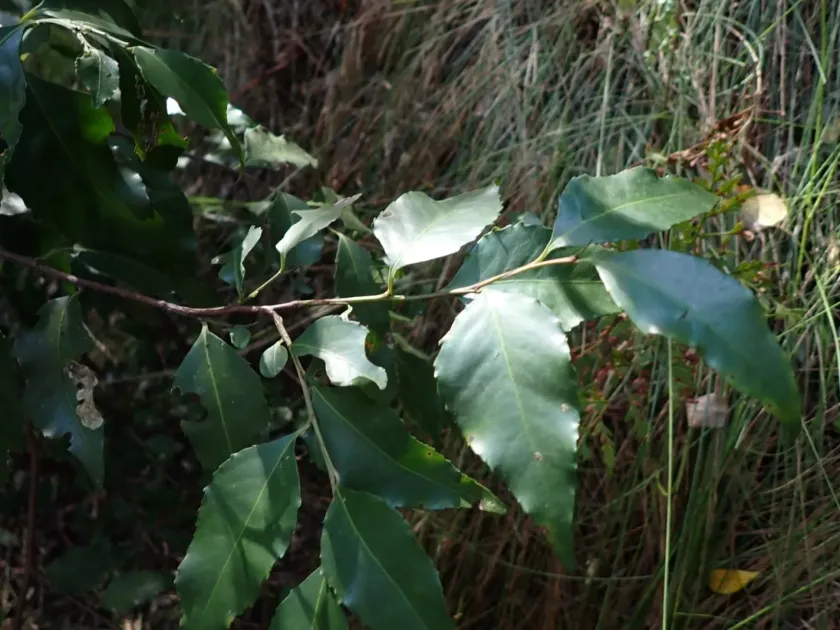
Description
Growing requirements
Maytenus acuminata, commonly known as the Silky bark, belongs to the Celastraceae family and is recognized for its dense, evergreen foliage. Native to the Afromontane forests of South Africa, it thrives in environments that offer consistent moisture and protection from severe climatic extremes.
In terms of soil requirements, this species favors deep, fertile, and well-drained loamy soils. It displays excellent growth rates in shaded or semi-shaded environments, making it an ideal candidate for understory planting or enrichment in existing forest structures where light penetration is moderate.
The climatic preferences of the Silky bark revolve around mild, temperate conditions. While the tree can withstand cooler temperatures as it matures, saplings must be shielded from frost to ensure survival. Maintaining a stable environment with adequate humidity is essential for the healthy physiological development of the tree.
Agricultural management involves routine monitoring of soil moisture levels to ensure the substrate does not dry out completely, especially during the establishment phase. Pruning may be required periodically to manage the shape of the canopy and improve the overall structural integrity of the plant in a nursery or landscape setting.
The primary utility of the Silky bark lies in its high-quality, hard wood, which has historically been used for specialized carpentry and tool handles. Furthermore, it serves a vital ecological role, supporting local biodiversity and providing food sources for various bird species that consume its arillate seeds.
Main diseases and pests
Typical pests affecting Maytenus acuminata include various scale insects that thrive on the undersides of leaves and along tender stems. Implementing an Integrated Pest Management (IPM) strategy, focusing on monitoring and biological control, is highly recommended to maintain tree vigor without excessive chemical intervention.
Fungal pathogens represent a significant threat if drainage systems fail, leading to root rot. To mitigate this risk, it is imperative to choose planting sites that prevent waterlogging and to ensure sufficient spacing between trees to allow for adequate airflow throughout the canopy.