

Reference · Crops
Caryophyllaceae
Carnation (Dianthus) is a significant genus of herbaceous plants belonging to the Caryophyllaceae family. This crop includes both annual and perennial varieties, which are cultivated globally for ornamental purposes, landscape design, and as a high-value commercial cut flower.
Main sections
527
sections
What the section contains
 Cow soapwort
Vaccaria
1 item
Cow soapwort
Vaccaria
1 item
 Cretan catchfly
Silene cretica
Cretan pink
Dianthus sphacioticus
Cretan catchfly
Silene cretica
Cretan pink
Dianthus sphacioticus
 Cretan sandwort
Arenaria cretica
Cretan sandwort
Arenaria cretica
 Cucubalus baccifer
Cucubalus
1 item
Cucubalus baccifer
Cucubalus
1 item
 Damask campion
Silene damascena
Damask campion
Silene damascena
 Degen's pink
Dianthus degenii
Degen's pink
Dianthus degenii
 Deptford pink
Dianthus armeria
Deptford pink
Dianthus armeria
 Dianthus acantholimonoides
Dianthus acantholimonoides
Dianthus acantholimonoides
 Dianthus balbisii
Dianthus balbisii
Dianthus balbisii
 Dianthus biflorus
Dianthus biflorus
Dianthus biflorus
 Dianthus broteri
Dianthus broteri
Dianthus broteri
 Dianthus collinus
Dianthus collinus
Dianthus collinus
 Dianthus crassipes
Dianthus crassipes
Dianthus crassipes
 Dianthus cruentus
Dianthus cruentus
Dianthus cruentus
 Dianthus cyri
Dianthus cyri
Dianthus cyri
 Dianthus geminiflorus
Dianthus geminiflorus
Dianthus geminiflorus
 Dianthus gracilis
Dianthus guttatus
Dianthus guttatus
Dianthus gracilis
Dianthus gracilis
Dianthus guttatus
Dianthus guttatus
 Dianthus hybrid
s
Dianthus hybrid
Dianthus hybrids
 Dianthus membranaceus
Dianthus micranthus
Dianthus micranthus
Dianthus membranaceus
Dianthus membranaceus
Dianthus micranthus
Dianthus micranthus
 Dianthus microlepis
Dianthus microlepis
Dianthus microlepis
 Dianthus monadelphus
Dianthus monadelphus
Dianthus monadelphus
 Dianthus nardiformis
Dianthus oschtenicus
Dianthus oschtenicus
Dianthus nardiformis
Dianthus nardiformis
Dianthus oschtenicus
Dianthus oschtenicus
 Dianthus pendulus
Dianthus pendulus
Dianthus pendulus
 Dianthus polymorphus
Dianthus polymorphus
Dianthus polymorphus
 Dianthus pungens
Dianthus pungens
Dianthus pungens
 Dianthus raddeanus
Dianthus raddeanus
Dianthus raddeanus
 Dianthus repens
Dianthus repens
Dianthus repens
 Dianthus rupicola
Dianthus rupicola
Dianthus rupicola
 Dianthus scaber
Dianthus scaber
Dianthus scaber
 Dianthus serrulatus
Dianthus simulans
Dianthus simulans
Dianthus serrulatus
Dianthus serrulatus
Dianthus simulans
Dianthus simulans
 Dianthus spiculifolius
Dianthus spiculifolius
Dianthus spiculifolius
 Dianthus subacaulis
Dianthus subacaulis
Dianthus subacaulis
 Dianthus trifasciculatus
Dianthus trifasciculatus
Dianthus trifasciculatus
 Dinaric mouse-ear
Cerastium dinaricum
Dinaric mouse-ear
Cerastium dinaricum
 Doubtful mouse-ear
Cerastium dubium
Doubtful mouse-ear
Cerastium dubium
 Drymaria
2 items
Drymaria
Drymaria
2 items
 Drymaria hirsuta
Drymaria hirsuta
Drymaria hirsuta
 Drymaria villosa
Drymaria villosa
Drymaria villosa
 Drypis
1 item
Drypis
Drypis
1 item
 Egyptian campion
Silene aegyptiaca
Egyptian campion
Silene aegyptiaca
 Eremogone
11 items
Eremogone
Eremogone
11 items
 Eudianthe
1 item
Eudianthe
Eudianthe
1 item
 False Armeria pink
Dianthus pseudarmeria
False Armeria pink
Dianthus pseudarmeria
 Field pink
Dianthus campestris
Field pink
Dianthus campestris
 Flax campion
Silene linicola
Flax campion
Silene linicola
 Flax cockle
Agrostemma linicola
Flax cockle
Agrostemma linicola
 Fleshy stitchwort
Stellaria crassifolia
Fleshy stitchwort
Stellaria crassifolia
 Forest pink
Dianthus sylvestris
Forest pink
Dianthus sylvestris
 Forked clove
Dianthus furcatus
Forked clove
Dianthus furcatus
 Fortune's Catchfly
Silene fortunei
Fortune's Catchfly
Silene fortunei
 Fragrant carnation
Dianthus fragrans
Fragrant carnation
Dianthus fragrans
 French Pink
Dianthus gallicus
French Pink
Dianthus gallicus
 Fringed campion
Silene ciliata
Fringed campion
Silene ciliata
 Fringed sandwort
Arenaria ciliata
Frivaldszky's Catchfly
Silene frivaldszkyana
Fringed sandwort
Arenaria ciliata
Frivaldszky's Catchfly
Silene frivaldszkyana
Marketplace
Products in this section · 12

Gold Star
ТОВ «Фабрика агрохімікатів», Черкаси, Україна
Herbicides
0
3
·
2.4K
23 offers
27.31 €per 1 l
Buy


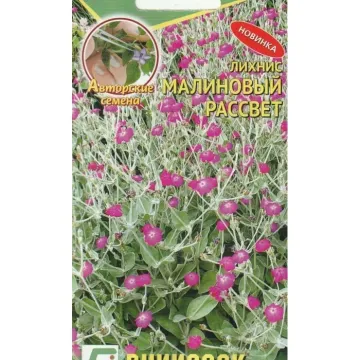


Caryophyllaceae
Native to Eurasia, these plants have been adapted to a wide range of climates through centuries of selective breeding. Their natural habitat varies from mountain slopes to open meadows, which has contributed to the diverse physiological traits observed in modern commercial cultivars.
Botanically, carnations are defined by their slender, opposite leaves and characteristic flowers with five petals, often featuring jagged or serrated edges and a distinct fragrance. The plant structure is adapted to optimize photosynthetic efficiency and mechanical stability, supporting the heavy floral heads during the blooming season.
Agronomic success with carnations requires well-drained, fertile soil with a neutral to slightly alkaline pH. Cultivation management involves strict temperature control, regular drip irrigation to prevent soil-borne pathogens, and balanced fertilization programs focusing on nitrogen during vegetative growth and potassium during flowering.
The primary use of the crop is within the floriculture industry. Growers must be vigilant against common diseases such as Fusarium wilt and rust, as well as pests like aphids and spider mites. Integrated Pest Management (IPM) strategies, including biological control and judicious use of fungicides, are essential for maintaining crop health and productivity.