


SKU #73697
·
58 views
BABY'S BREATH
Gypsophila
User rating
0 votes0% positive reviews
No ratings yet — be the first.
Flower Color
White, Pink
Assignment
Dried flower, Border Mixes, Floristry
Registration year
2011
Prices in stores
from251.02 €per 1000 seeds
pack from 1.26 € per 5 pcs
1 offer from 1 store
Store offers · 1 from 1 stores
Prices are updated on loadLoading offers…
Available at: paliuha.com.ua
Aggregator catalog: prices are collected automatically from store websites, normalized by AI and converted at the current exchange rate. Before ordering, confirm the price and availability on the store's website. This block is not indexed by search engines — the data is loaded after the page opens.
About product

An elegant gypsophila variety that has become a staple for professional floristry and stunning dried floral arrangements.
Flower Color
White, Pink
Assignment
Dried flower, Border Mixes, Floristry
Registration year
2011
Description
Breeding Heritage and Market Status
"Kruzhevnitsa" is a product of extensive research by the Educational and Scientific Center "Vegetable Experimental Station" and the Federal Scientific Center for Vegetable Growing. The variety has become a significant milestone in regional decorative breeding, embodying quality standards set by authors E. M. Khomyakova and Y. P. Shevchenko. Professionals value this variety for its predictable performance and hardiness typical of modern breeding standards.
Visual Profile and Horticultural Qualities
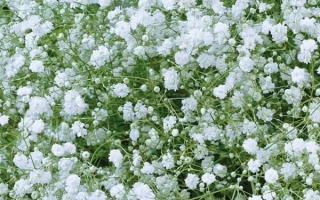
The name "Kruzhevnitsa" (meaning "Lacemaker") perfectly describes its aesthetic: delicate inflorescences form a light, lace-like cloud, making it a standout in both landscaping and cut-flower production. The color palette spans from pure white to soft pink, providing florists with versatility for refined arrangements.
Applications: From Garden Borders to Professional Floristry
- Floristry: Regarded as a benchmark material for professional floral design. Thanks to its high decorative value and durability, it is highly sought after for adding volume and an airy texture to bouquets.
- Dried Flowers: A key advantage is its suitability for drying. The inflorescences maintain their shape and delicate color, making them ideal for rustic or Provence-style interior décor.
- Mixed Borders: In garden design, it serves to fill voids and create soft background accents, blending seamlessly with vibrant perennials.
By selecting "Kruzhevnitsa," growers and landscape designers invest in verified genetic material that performs consistently well in both commercial operations and private gardens.
Crop & resistance
Crop
Specifications
| Flower Color | |
|---|---|
| Assignment | |
| Registration year | 2011 |
| Catalog | Catalog → Gypsophila |
| Legal data |
Show · 7
|
| Country | Russia |
Not yet комментариев. Be the first!
Alternatives
Gypsophila · similar varieties

See also
Often considered together with this variety






Recently viewed
Products you’ve viewed on this site
Reviews · 0