


Reference · Crops
Corn spurry
Spergula
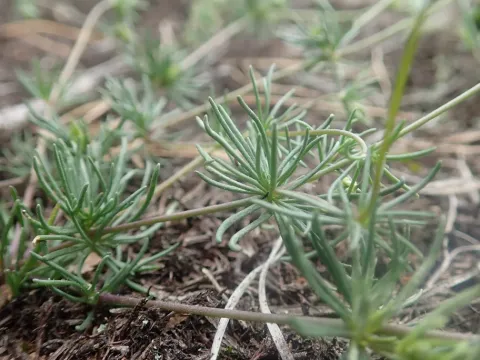
Corn spurry (Spergula arvensis) is an annual herbaceous plant belonging to the Caryophyllaceae family, characterized by its rapid growth cycle.
1
items
What the section contains
Marketplace
Products in this section · 1
Corn spurry
Sowing typically takes place in early spring, as the seeds have high germination rates even at temperatures as low as 3-5 degrees Celsius.
The recommended seeding rate is approximately 10-15 kg per hectare, depending on the purpose of the crop and local soil conditions.
Due to the small size of the seeds, they should be sown shallowly, ideally at a depth of no more than 1-2 centimeters.
The crop's extremely short growing season allows for flexibility, often enabling double-cropping or use as a catch crop after primary harvesting.
Corn spurry is widely recognized for its ability to thrive on poor, sandy, and acidic soils where many common crops fail to establish.
It prefers moderate moisture levels and is known to be quite resilient to periods of excessive soil moisture, making it suitable for low-lying areas.
While it is undemanding regarding nutrient levels, it responds well to modest fertilizer applications, which can significantly boost biomass yield.
Climate adaptability is one of its primary strengths, as it handles temperate conditions and significant temperature fluctuations with ease.
The plant does not require high levels of soil preparation, making it a low-input option for agricultural land restoration projects.
The biomass yield of corn spurry usually ranges from 15 to 25 tons per hectare, depending heavily on rainfall and soil quality.
As a green manure crop, it provides excellent soil cover and contributes substantial organic matter, which enhances soil structure over time.
For forage purposes, it produces a palatable green mass that can be integrated into the diets of various livestock classes.
Beekeepers value the plant for its nectar, which provides a useful food source for pollinators during gaps in the main flowering season.
Its economic value is highest on marginal lands, providing productive capacity where other agricultural options would require intensive improvement.
Corn spurry is generally resistant to most common agricultural diseases, maintaining high health standards under standard rotation practices.
In extremely wet or poorly drained conditions, fungal root pathogens may occasionally cause minor damage to the plant root systems.
Pest pressures are generally low; however, wireworms can sometimes affect emergence if the soil contains high populations of these pests.
Crop rotation and field hygiene are usually sufficient to mitigate potential risks without the need for intensive chemical interventions.
The competitive nature of corn spurry means it often suppresses weeds before they can establish, naturally reducing the need for herbicides.
Harvesting for forage should occur during the early flowering phase to ensure the highest protein content and digestibility for livestock.
When used as a green manure, the crop should be incorporated into the soil before seeds set to prevent it from becoming a weed in subsequent seasons.
Seed harvest is conducted via combine when the seed pods turn brown and reach full maturity, requiring careful settings to prevent loss.
Proper storage is essential; seeds should be dried to a low moisture content to ensure longevity and viability for the following planting season.
Ensuring timely harvest is crucial for maintaining the quality of the harvested biomass, whether intended for feeding or for biological soil improvement.