
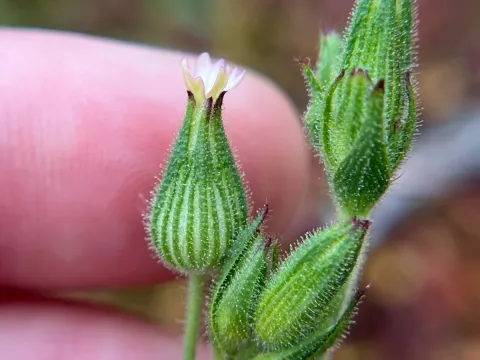
Conical catchfly
Silene coniflora
Silene coniflora, known as the conical catchfly, is a member of the Caryophyllaceae family. In agricultural settings, it is often classified as a persistent weed that invades winter and spring cereal crops, competing with them for vital resources and space.
What the section contains
Conical catchfly
Seed germination typically begins in early spring when soil temperatures reach 4–6 degrees Celsius. In regions with mild winters, seeds can germinate in the autumn, forming a basal rosette that allows the plant to overwinter and gain a competitive head start during the early spring season.
The optimal depth for seed germination is shallow, usually ranging between 1 to 3 centimeters. Deep tillage practices are highly effective at suppressing weed emergence, as burying the seeds deeper significantly reduces their viability and ability to produce seedlings.
The plant's lifecycle is synchronized with that of cereal crops, which allows it to thrive during the critical stages of grain development. Effective mechanical weeding, such as harrowing early in the season, is a crucial agronomic practice to control young seedlings before they establish.
The most intense vegetative growth occurs during the stem elongation and heading phases. During this time, the conical catchfly rapidly accumulates biomass, effectively shading the crop and drawing significant amounts of water and nutrients from the soil, which can lead to yield losses.
The conical catchfly is highly adaptable to various soil types, though it thrives best in well-aerated sandy or light loam soils. It shows remarkable resilience to short periods of moisture stress due to its moderately deep and efficient root system.
This species requires high light intensity for optimal growth. While dense crop canopies can naturally suppress its development by limiting light penetration, any thinning of the crop stand allows the conical catchfly to aggressively colonize open areas of the field.
The ideal soil pH for this plant ranges between 6.0 and 7.5. Excessive soil moisture or waterlogged conditions are generally unfavorable for seed germination and plant development, making the weed more prevalent in well-drained agricultural fields.
Management of Silene coniflora requires a robust crop rotation strategy, incorporating row crops that allow for effective mechanical weeding and soil cultivation. Herbicidal control remains a standard practice for managing infestation levels in large-scale cereal production.
Climate plays a significant role in the expansion and dominance of the species. A temperate climate with moderate rainfall during the spring and summer provides the necessary conditions for widespread seed dispersal and successful establishment across the entire field area.
Silene coniflora can serve as an alternative host for several pathogens that affect cereal crops. By harboring these fungi and bacteria, the weed contributes to the persistence of diseases in the agricultural environment, facilitating their spread to cultivated plants.
Several pests, including aphids and specific leaf-mining flies, are commonly found on the conical catchfly. These pests not only damage the plant but can also migrate to neighboring crop plants, potentially transmitting viruses and causing further economic damage.
- Powdery mildew, especially during seasons with high humidity;
- Root rot diseases resulting from poor soil conditions and density;
- Nutrient deficiency symptoms leading to chlorosis and stunted growth;
- Stem damage caused by insect larvae during the flowering stage.
Monitoring for signs of disease on these plants is essential for proactive field management. Early detection of pests on the weed population can alert farmers to the potential for spreading to the main crop, allowing for localized intervention.
Given the biological hardiness of the species, control efforts must be multifaceted. Integrating mechanical techniques, proper crop rotation, and targeted chemical applications is the most effective approach to minimizing the impact of the conical catchfly on grain yields.