
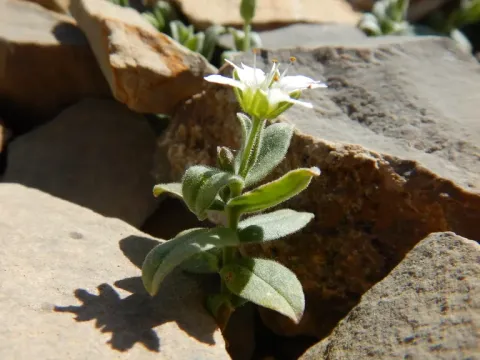
Common chickweed
Stellaria
Common chickweed, known scientifically as Stellaria media, is a highly prolific annual weed that can complete its life cycle in just a few weeks.
What the section contains


Common chickweed
The seeds of this species are capable of germinating in cool conditions, often emerging in early spring or even during mild winter spells.
Given its fast life cycle, multiple generations can emerge and set seed within a single growing season, making it a persistent nuisance for farmers.
The seeds have a relatively short dormancy period, which allows the plant to emerge throughout the year whenever moisture levels are adequate.
Rapid maturation is a key characteristic, ensuring that even late-germinating plants can contribute to the soil seed bank before the first killing frosts.
Common chickweed thrives in moist, fertile, and nitrogen-rich soils, often establishing itself in areas with high levels of organic matter.
It is remarkably shade-tolerant, allowing it to compete effectively with crops like cereals, vegetables, and legumes in dense plantings.
The plant prefers cool and humid weather conditions, which promote its rapid vegetative growth and extensive ground cover development.
Successful management strategies focus on preventing seed production and exhausting the seed bank through shallow cultivation and tillage.
Maintaining a high level of crop canopy closure is an effective cultural practice to suppress the growth of this light-sensitive weed.
Stellaria media acts as a significant reservoir for various plant viruses and pathogens that can severely impact major agricultural crops.
The dense growth habit of the weed creates a humid microclimate that is highly conducive to the spread of fungal diseases like powdery mildew.
Various insect pests, including aphids and spider mites, utilize chickweed as a host plant during the off-season or early stages of crop development.
Infestations of chickweed are often associated with increased populations of soil-borne nematodes, which cause root damage to many vegetable species.
Integrated pest management, including the use of pre-emergent and post-emergent herbicides, is often required to control widespread infestations effectively.