
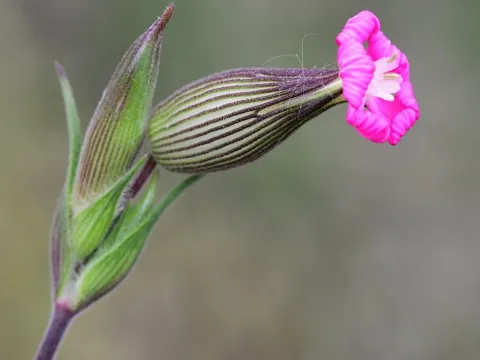
Sand catchfly
Silene conica
The sand catchfly, known botanically as Silene conica, is a member of the Caryophyllaceae family. It is typically characterized as an annual herbaceous plant, often found growing in open fields, dunes, and agricultural lands.
What the section contains
Sand catchfly
The plant undergoes a rapid lifecycle, germinating from seeds during the early spring months. Its development is closely tied to the warming of the soil, allowing it to compete with emerging agricultural seedlings for space and nutrients.
Morphologically, Silene conica features narrow leaves and a distinct conical-shaped calyx, from which its Latin name is derived. The plant produces relatively small but numerous seeds that can persist in the soil seed bank for several seasons.
Growth is typically concentrated in the first half of the season. By the time the summer heat peaks, the plant has often finished its flowering and seed-setting phases, ensuring its survival for the next growing cycle.
Dispersal is primarily abiotic, occurring through wind, water, or mechanical transport via farm equipment. The resilience of its seeds makes it a challenging plant to eradicate once it has established in a field.
This species thrives in well-drained, sandy, or light soil types. Its preference for lighter substrates explains why it is frequently associated with sandy agricultural zones where moisture management is key.
Sunlight is a major requirement for the sand catchfly. It does not tolerate heavy shading and prefers open spaces where it can access high levels of photosynthetically active radiation throughout the day.
The plant demonstrates moderate tolerance to various pH levels but generally prefers neutral to slightly alkaline conditions. It is frequently observed on disturbed ground, including roadside edges and newly cultivated fields.
Agronomic control involves standard weed management practices such as harrowing, crop rotation, and the use of competitive crop varieties. Creating a dense canopy early in the season is one of the most effective ways to suppress its growth.
Soil nutrient status influences the size and reproductive capacity of the plant. Soils with high fertility may lead to more vigorous weed growth, necessitating more aggressive control measures during the early establishment phase.
The plant can host various fungal pathogens, specifically those that target the Caryophyllaceae family. These include various rusts and leaf spots that thrive under moist, humid conditions, potentially spreading to adjacent crops.
Insects like aphids and certain larvae may feed on the plant, using it as a secondary host. While not always directly destructive to the plant, these pests contribute to the overall pest pressure in the agricultural ecosystem.
Chemical control is generally effective using selective herbicides, provided they are applied during the seedling stage. Late-season control is less effective because the plant rapidly develops its protective seed capsule.
- Use of high-quality, weed-free seed stock.
- Pre-emergence soil cultivation to eliminate young weeds.
- Strategic rotation to non-host crops to break the lifecycle.