
Sagina subulata
Sagina subulata
Description
Sowing dates
Sowing Sagina subulata seeds is typically done in early spring using a tray-based approach. The seeds are minuscule, so they should be pressed lightly onto the surface of moist soil without covering them, as they require light to germinate effectively.
Transplanting established seedlings into the garden occurs once the danger of frost has passed, usually late May. Planting them about 10–15 centimeters apart encourages the plants to spread and eventually form a thick, uniform mat of foliage.
For those looking for faster results, vegetative propagation by dividing existing clumps or using pre-grown sod mats is highly recommended. This ensures immediate coverage and reduces the time needed for the groundcover to fill in bare spots.
Maintaining consistent moisture is vital during the initial establishment phase. Proper irrigation in the first few weeks allows the shallow root system to anchor itself firmly into the underlying soil structure.
When selecting a planting site, ensure the soil is loose and friable. Adding compost or sand during soil preparation can significantly improve drainage, which is crucial for the long-term survival of the young plants.
Growing requirements
Sagina subulata, a member of the Caryophyllaceae family, is a popular groundcover known for its moss-like appearance. Originating from Europe, it thrives in temperate climates and is highly valued for its ability to create a soft, green carpet in landscaping.
The plant prefers full sun to partial shade and requires well-draining, slightly acidic to neutral soil. It is an excellent choice for rock gardens, between paving stones, or as a low-maintenance substitute for traditional turfgrass.
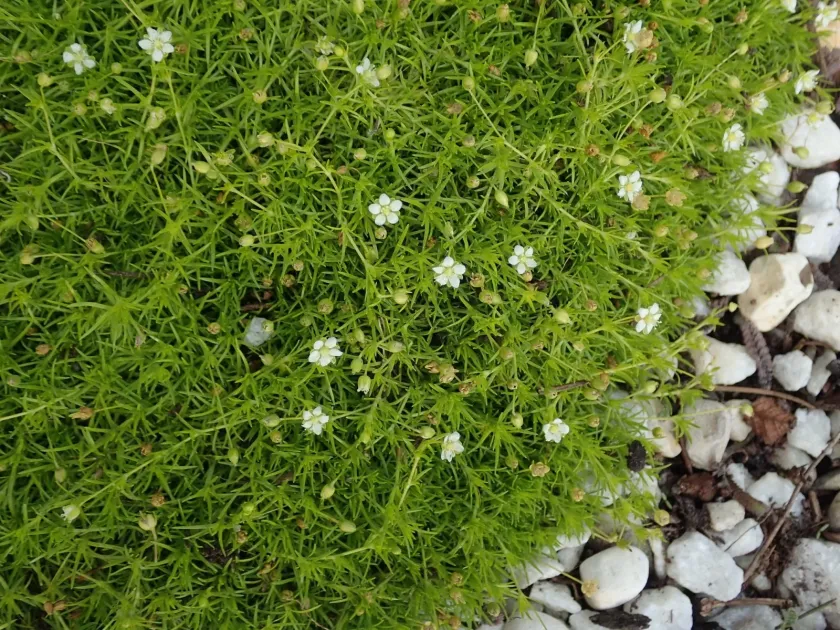
Botanically, it forms dense mats of fine, awl-shaped leaves. During the peak of summer, specifically from June to August, the foliage is highlighted by tiny, star-shaped white flowers, adding aesthetic value to the garden.
Agrotechnical care is minimal as the plant does not require mowing. However, during periods of prolonged drought, regular overhead watering is necessary to prevent the leaves from drying out and losing their vibrant emerald color.
This species exhibits excellent winter hardiness, making it suitable for various climate zones. It maintains its structural integrity even in colder regions, recovering quickly as soon as the spring growth cycle begins.
Main diseases and pests
Root rot is the most common threat to Sagina subulata, usually triggered by poor drainage or overly saturated soil conditions. Ensuring the site is well-drained is the best preventive measure against such fungal issues.
Slugs and snails can be problematic, particularly in damp environments, as they feed on the dense foliage. Placing physical barriers or using pet-safe molluscicides around the perimeter can effectively protect the plants from damage.
Weed infestation is a major concern while the carpet is establishing itself. Regular manual weeding is essential during the first season to ensure that fast-growing weeds do not outcompete the young Sagina plants.
Occasional infestations of aphids may occur, weakening new growth. If observed, a gentle spray with insecticidal soap is usually sufficient to manage the population without harming the dense mat structure.
Keeping the area free of accumulated debris is good practice for plant health. Clearing dead organic matter helps improve airflow through the mat, significantly reducing the risk of mold and other moisture-related pathogens.