
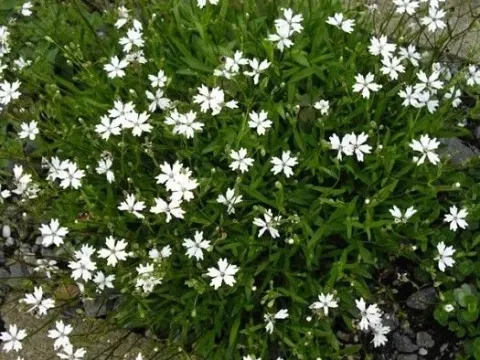
Alpine catchfly
Silene alpestris
Alpine catchfly (Silene alpestris) is a charming perennial member of the Caryophyllaceae family. Known for its mat-forming growth habit and profuse white flowers, it is an ideal candidate for rock gardens and alpine beds.
What the section contains
Alpine catchfly
Propagation is primarily achieved through seeds or division of mature clumps. Seeds should be sown in early spring or autumn, ideally in a well-draining seed-starting mix to ensure successful germination.
The seeds are relatively small and require light for optimal germination; therefore, they should not be buried deeply in the soil. A light dusting of sand or vermiculite is sufficient to keep them in place while allowing enough light exposure.
Once seedlings have developed two sets of true leaves, they can be transplanted into larger pots or directly into their permanent garden location. Spacing should be approximately 25 centimeters to allow the plant to spread naturally.
Establishing the plants in their first year is crucial. Keep the soil consistently moist but never waterlogged to encourage deep root development before the onset of the first harsh winter or summer heat.
Silene alpestris thrives in conditions that mimic its native high-altitude habitat. It requires a sunny location with excellent drainage, as the species is highly sensitive to moisture buildup around the roots.
The soil should be gritty, alkaline to neutral in pH, and poor in nutrients rather than overly rich. A rocky substrate mixed with organic compost provides the perfect balance for healthy foliage and flowering.
Climate-wise, the plant prefers cool to moderate temperatures. While it is hardy, providing light shade during the hottest part of the summer day can help maintain its lush appearance and extend the blooming period.
Mulching with decorative gravel or crushed stone is a highly recommended practice. It not only enhances the aesthetic appeal of the rock garden but also keeps the plant's crown dry, preventing rot and fungal issues.
Watering should be balanced: avoid overhead irrigation that might dampen the delicate blooms. Instead, water at the base of the plant during dry spells, ensuring the moisture reaches the root zone effectively.
The primary threats to Silene alpestris are related to poor air circulation and excessive moisture, which promote root and crown rot. These fungal issues can rapidly compromise the integrity of the entire plant.
Insect pests such as aphids and spider mites may target the plant during periods of drought. Their presence is often detected by yellowing leaves or stunted growth of the flower stems, requiring immediate attention.
- Improve soil drainage to prevent fungal growth.
- Use horticultural soap for organic pest control if an infestation occurs.
- Ensure sufficient spacing between plants to allow for airflow.
- Prune away withered foliage after flowering to improve garden hygiene.
To keep the plants healthy, it is essential to monitor them regularly for early signs of distress. A clean garden environment, free of excess decaying organic matter, significantly reduces the risk of attracting harmful pathogens.
If chemical intervention is necessary, opt for systemic fungicides early in the season if a history of fungal problems exists in your garden area. Always follow label directions to ensure plant and soil safety.