
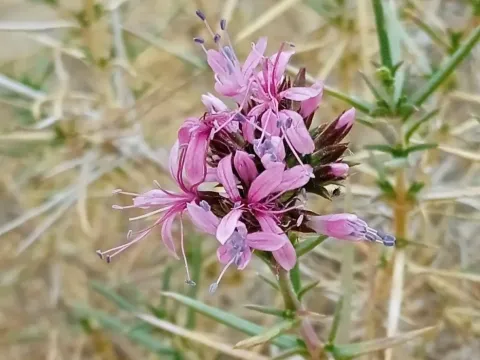
Acanthophyllum
Acanthophyllum C. A. Mey.
Acanthophyllum is a perennial species, so planting is primarily conducted when establishing new nursery areas or dedicated cultivation sites. The optimal time for sowing is early spring or late autumn to allow for natural stratification of the seeds.
What the section contains

Acanthophyllum
The seeds have a tough outer coat, which may require mechanical or chemical scarification to improve germination rates. In field conditions, seeds should be sown in rows with spacing up to 60 centimeters to allow enough room for the plants to mature.
Seeds should be planted at a shallow depth of 1–2 centimeters, as they have limited energy reserves and need quick access to moisture to begin the growth process.
Seedlings develop slowly, meaning weed control is essential in the first few months of the plant's life to prevent competition for light and nutrients.
Acanthophyllum is highly suitable for marginal lands, providing a robust option for agricultural development in arid or semi-arid regions where other crops struggle.
Acanthophyllum belongs to the Caryophyllaceae family and is a typical xerophyte, specifically adapted to the harsh conditions of Central Asian steppes and deserts.
The plant thrives in well-drained, sandy, or gravelly soils with low organic content. It shows remarkable tolerance to salinity, making it an excellent candidate for land reclamation efforts.
As a light-loving species, it must be grown in fully open areas with no shading from trees or shrubs. High solar radiation is beneficial for the accumulation of active compounds.
The plant is highly resistant to extreme temperature fluctuations, enduring both intense summer heat and cold winter frosts. Excess moisture is its main enemy, often causing root damage.
Standard cultivation practices are simple, focusing on minimal soil cultivation and occasional weeding during the initial development phase of the plantation.
The primary economic value of Acanthophyllum lies in its root system, which is a rich source of triterpene saponins. Yield depends on the age of the plants and local climate conditions.
Harvesting is typically initiated from the third year onwards, once the concentration of saponins in the roots reaches commercial standards. Productivity per hectare is stable due to the plant's longevity.
The chemical content of the roots determines the quality of the raw material, which is highly sought after in the pharmaceutical, cosmetic, and food industries.
Because the biomass accumulation is slow, Acanthophyllum requires a long-term strategy for plantation management to ensure a consistent supply of raw materials.
Monitoring the plant's health and saponin concentration is necessary to determine the optimal timing for harvesting to maximize output without depleting the field's resources.
Acanthophyllum possesses natural defenses, including specific chemical compounds that make it unpalatable or toxic to many common agricultural pests.
Potential threats include small mammals that may feed on seeds or young sprouts. Root rot is a risk only if the soil remains waterlogged, which rarely happens in native arid environments.
Pests such as aphids may occur during abnormally dry summers, but their impact is usually negligible on established plants, requiring no heavy chemical intervention.
Fungal diseases are rarely a problem and usually indicate poor soil drainage or excessive irrigation practices that are inappropriate for a drought-adapted plant.
Preventative measures revolve around maintaining appropriate plant density and soil conditions, allowing the plant to thrive without excessive synthetic chemical inputs.
Harvesting is done by digging up the roots or mowing the above-ground mass, depending on the specific industrial application. Late autumn is the preferred time for harvesting to ensure metabolite concentration is highest.
Mechanical harvesting involves undercutting the root system at a depth of 20–30 centimeters. Specialized equipment is used to minimize root damage and soil contamination.
Immediately after harvest, the raw material must be cleaned and dried to prevent enzymatic degradation of the active saponins. Drying is performed under ventilated shelters at controlled temperatures.
The dried roots are then processed, usually by grinding, to prepare them for extraction. Proper storage in dry, cool conditions is essential for maintaining the quality and potency of the saponins.
Periodic crop rotation or field rejuvenation is recommended to maintain the productivity of the land and the overall health of the Acanthophyllum population.