
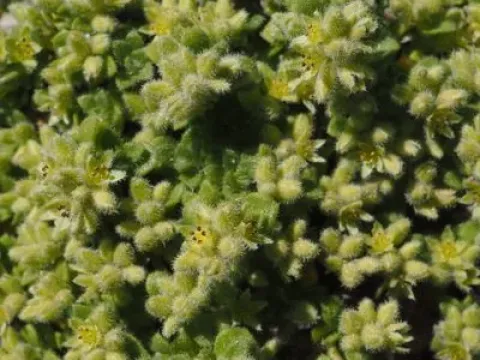
Alpine rupturewort
Herniaria alpina
Sowing of alpine rupturewort is typically conducted in early spring or late autumn in open fields. The seeds are very small, so they should be sown at a minimal depth, not exceeding 0.5–1 cm.
What the section contains
Alpine rupturewort
For uniform germination, autumn sowing is considered optimal, as it provides natural stratification for the seeds. During spring sowing, it is recommended to keep the seeds in cold conditions for several weeks before planting.
When using a nursery method, sow seeds in March in a light substrate. It is important to maintain stable soil moisture until the first sprouts appear, after which irrigation should be moderately reduced.
Seedlings are transplanted into open fields after the risk of late frosts has passed. The plant tolerates transplanting well, provided the root ball remains intact.
When sowing directly into the permanent growing site, it is necessary to ensure a planting density of about 20x20 cm to allow for proper cushion development.
Alpine rupturewort is a perennial herbaceous plant of the Caryophyllaceae family, adapted to harsh mountain conditions. It prefers open, well-lit areas with direct sunlight.
The crop is highly demanding regarding soil drainage. Water stagnation is fatal to the root system, making stony, sandy, or loamy soils with a neutral or slightly alkaline pH the ideal substrate.
The plant possesses high frost resistance and can withstand significant temperature fluctuations characteristic of alpine zones. It does not require frequent watering due to its natural drought tolerance.
In agricultural practice, excessive application of organic fertilizers must be avoided. An excess of nitrogen leads to lodging of the stems and a decrease in the concentration of bioactive substances.
To maintain healthy plantings, it is recommended to periodically loosen the soil between rows to prevent the formation of a soil crust that blocks oxygen access to the roots.
The economic value of rupturewort lies in the harvesting of quality medicinal raw material, specifically the aerial parts of the plant. The yield of green biomass depends on plant density and light intensity.
The first harvest of commercial raw material is possible in the second year of vegetation. The main harvest of biomass is carried out during the flowering period, when the concentration of flavonoids and saponins is at its peak.
Optimal yields are achieved with proper mowing regimes. The plant is capable of providing multiple cuts per season if sufficient vegetative shoots are left for regeneration.
Drying of the raw material should be carried out in well-ventilated areas at temperatures not exceeding 40 degrees Celsius to preserve valuable chemical components.
With intensive cultivation and strict adherence to agricultural requirements, stable yields of dried medicinal products can be expected for 3–4 years from a single plantation.
The primary threat to the crop is root rot caused by waterlogged soil or lack of effective drainage. These diseases can quickly affect an entire cushion, leading to plant death.
In dense plantings, powdery mildew may occur, manifesting as a white coating on the leaves. To combat this, it is necessary to ensure good air circulation between the plants.
Among pests, soil insect larvae that damage the root crown pose the greatest danger. Deep autumn plowing of the field before establishing the plantation serves as an effective preventive measure.
Aphids may infest young, tender shoots during the spring growth phase, sucking juices and suppressing the plant. In cases of severe infestation, biological insecticides with short waiting periods are used.
Phytosanitary control is a crucial element of protection: removing weeds that can act as intermediate hosts for fungal spores or vectors for viral diseases is essential.
Harvesting of rupturewort is performed either mechanically or manually. The optimal period for collection is during the phase of mass flowering, when the plant contains its highest reserve of healing substances.
The aerial parts are cut 3–5 cm above the soil level, taking care not to damage the root crown. The use of sharp tools prevents stem fraying and promotes better regrowth.
The collected biomass must be cleaned of impurities, weeds, and yellowed leaves directly in the field. This significantly reduces labor costs during subsequent processing.
Transportation of fresh raw material to the drying facility must be carried out in a loose state, preventing self-heating of the plant mass, which leads to rapid quality loss.
After harvest, it is recommended to apply a light phosphorus-potassium fertilizer to help the plants prepare for the winter period.