
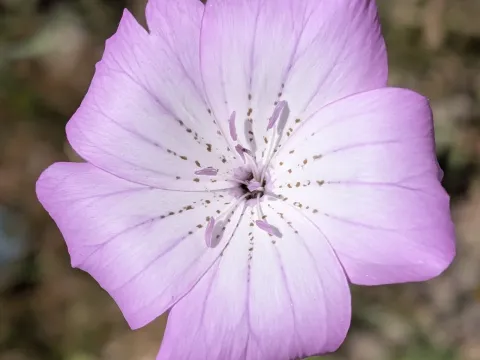
Agrostemma brachyloba
Agrostemma brachyloba
Agrostemma brachyloba is an annual herbaceous species that thrives when established during early spring. Sowing should occur once soil temperatures consistently reach a level suitable for rapid germination, typically between 8 and 10 degrees Celsius.
What the section contains
Agrostemma brachyloba
To ensure uniform emergence, seeds should be sown at a shallow depth of approximately 2 to 3 centimeters. Proper soil-to-seed contact is essential for maximizing the rate of establishment in the field.
The crop exhibits robust seedling vigor, allowing it to compete effectively with surrounding weeds early in the growing season. Early sowing strategies enable the plants to capitalize on early-season moisture reserves.
Selecting the correct planting density is critical for managing biomass development. Overcrowding can lead to resource competition, while too thin a stand may allow for unnecessary weed encroachment.
Delayed planting schedules can negatively impact the plant's overall development cycle, potentially leading to a reduction in total harvestable biomass by the end of the vegetative period.
This crop prefers well-drained, fertile soils with a neutral pH. It is highly sensitive to waterlogging, as saturated soil conditions can lead to root system degradation and poor overall plant health.
High levels of solar radiation are necessary for the optimal physiological development of Agrostemma brachyloba. Selecting sites with full sun exposure is vital for maximizing photosynthetic rates and biomass accumulation.
While the plant has moderate drought tolerance, consistent moisture availability during the stem elongation phase is crucial. Adequate rainfall or supplemental irrigation supports uniform growth patterns across the field.
Fertility management, specifically the application of phosphorus and potassium, helps strengthen the plant's structural integrity. Soil testing should be performed to determine the exact nutritional needs of the specific field site.
Maintaining a clean field surface through occasional cultivation helps improve soil aeration. Proper management of the physical soil environment encourages deep and efficient root development.
Agrostemma brachyloba is susceptible to several fungal diseases, particularly powdery mildew, which often thrives in conditions of high humidity and poor air circulation within the plant canopy.
Common agricultural pests, such as aphids and leaf-feeding beetles, can cause significant damage to the foliage and stems. Vigilant monitoring is required to detect early signs of infestation before populations reach critical levels.
Integrated Pest Management (IPM) practices should be employed to mitigate damage. This involves monitoring population thresholds and using biological controls whenever possible to maintain ecological balance.
Crop rotation remains the most effective defense against soil-borne pathogens. Rotating away from other members of the Caryophyllaceae family helps break the cycle of infection and prevents long-term soil health issues.
Chemical control, if necessary, should be applied with precision to minimize impact on beneficial insects. Using fungicides and insecticides according to label guidelines ensures the longevity of the crop’s productivity.