
Strapwort
Corrigiola litoralis
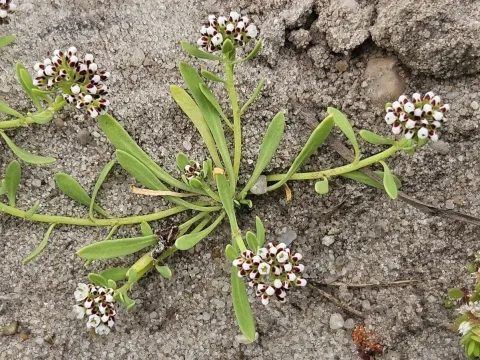
Strapwort (Corrigiola litoralis) is a prostrate herbaceous plant belonging to the Caryophyllaceae family. It is recognized by its spreading stems that form dense mats over sandy, gravelly, or sparsely vegetated ground, making it a distinctive species in its natural habitat.
What the section contains
Strapwort
The plant thrives in well-drained, nutrient-poor substrates, particularly along riverbanks, lake shores, and coastal dunes. It possesses a high tolerance for varying moisture levels but requires significant exposure to direct sunlight to maintain healthy growth and flower production.
Its climatic requirements are centered around temperate regions, where it capitalizes on early season moisture. The plant is well-adapted to environments where soil temperatures can fluctuate rapidly due to the nature of the sandy substrates it prefers to inhabit.
Botanically, the species features glaucous, linear leaves and small white flowers arranged in tight clusters. Its biological strategy relies on prolific seed production, allowing the plant to rapidly colonize areas where environmental disturbance has created gaps in the vegetation cover.
From a utility perspective, Corrigiola litoralis is valued in ecological restoration projects for its ability to stabilize loose, unstable soils. Its root architecture provides a protective layer that mitigates the effects of wind and water erosion in vulnerable coastal areas.
Strapwort is generally resilient to pests and diseases due to its niche adaptation to harsh, barren environments. The most significant threat to its health is the encroachment of taller, invasive vegetation, which leads to shading and eventual exclusion of the species from the site.
In terms of pathogens, excessive moisture in poorly drained areas can lead to fungal infections affecting the roots and stems. Maintaining proper drainage and avoiding soil compaction are the primary cultural practices to ensure the vitality of this plant species.