
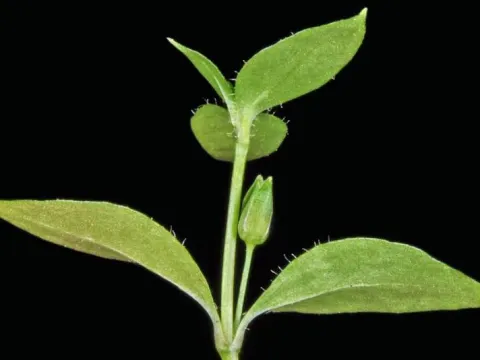
Stellaria viridula
Stellaria viridula
Stellaria viridula, a member of the Caryophyllaceae family, is a herbaceous plant often appreciated for its resilience in temperate environments. It is characterized by its slender stems and delicate leaves, which contribute to its rapid biomass accumulation.
What the section contains
Stellaria viridula
Sowing should take place in early spring, as soon as the soil can be worked. The seeds require shallow planting, typically at a depth of 1–2 centimeters, ensuring sufficient moisture contact for rapid germination. Proper spacing is essential for air circulation.
This species thrives in moist, well-drained, and nutrient-rich soils. It prefers a pH range between 6.0 and 7.0. While it can adapt to various conditions, it performs best in partial shade, mimicking its natural habitat on the edges of forests or lush meadows.
Consistent moisture is key; the soil should not be allowed to dry out completely between waterings. During periods of low rainfall, irrigation is necessary to maintain productivity and prevent the plant from flowering prematurely due to heat stress.
The main threats to Stellaria viridula include damp-off diseases, which can affect young seedlings if the soil remains waterlogged. Additionally, aphids and spider mites may target the foliage during hot, dry spells, necessitating regular field monitoring and integrated pest management.