
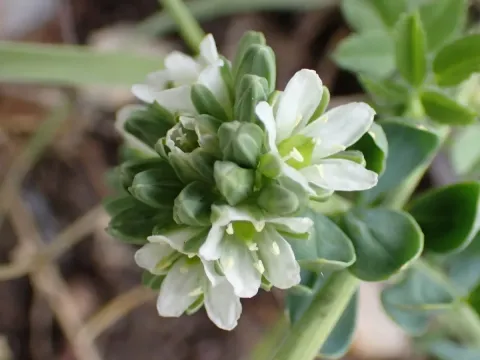
Telephium
Telephium
Telephium is a genus of herbaceous plants belonging to the Caryophyllaceae family. These plants are characterized by their succulent nature, which enables them to thrive in arid environments where water availability is significantly limited or intermittent.
What the section contains


Telephium
The native range of the genus includes the Mediterranean basin, the Caucasus, and parts of Central Asia. Telephium typically grows on rocky slopes, sandy soils, and open, sun-exposed areas where it successfully competes for space and limited nutrients with other xerophytic species.
Botanically, the plant features fleshy, succulent leaves and resilient stems that act as water reservoirs. These structural adaptations allow the plant to withstand prolonged dry spells and high solar radiation, making it highly drought-tolerant compared to standard agricultural crops.
Cultivation requirements necessitate well-draining, gritty, or sandy soils to prevent moisture accumulation around the roots. Telephium requires full sunlight exposure to maintain its compact growth habit and overall physiological health; low-light conditions often lead to etiolation and increased susceptibility to disease.
In terms of agricultural and landscape usage, Telephium is highly valued for its low-maintenance profile in xeriscaping and alpine garden designs. It serves as an excellent ground cover in environments where traditional turf or ornamental plants cannot survive due to poor soil fertility.
The most significant threat to Telephium is fungal infection, specifically root rot, induced by waterlogging or excessive humidity. Due to its succulent biology, the plant cannot tolerate saturated soil conditions, which quickly lead to the decomposition of its vascular system.
Pests such as aphids and spider mites are known to infest the plant, especially in greenhouse conditions where air circulation might be poor. Regular monitoring of the foliage and stems is essential to catch early signs of infestation before significant damage occurs to the plant's succulent tissues.
Effective management strategies include optimizing soil drainage and ensuring adequate spacing between plants to promote airflow. Chemical interventions should be used sparingly and only when cultural controls, such as proper site selection and irrigation management, prove insufficient to contain pest pressure.