
Thylacospermum
Thylacospermum
Thylacospermum is a genus of perennial herbaceous plants belonging to the Caryophyllaceae family. The most prominent species, Thylacospermum caespitosum, is renowned for its remarkable physiological adaptations to the extreme environments of high-altitude mountain ranges.
What the section contains

Thylacospermum
The native distribution of this plant includes the high alpine and nival zones of Central Asia, specifically across the Himalayas, Pamir, Tian Shan, and the Tibetan Plateau. It thrives at elevations ranging from 4,000 to 5,500 meters, where atmospheric conditions are typically harsh.
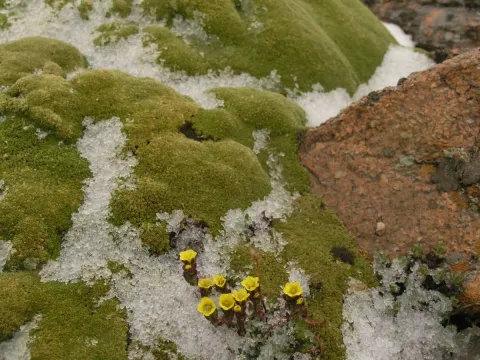
Botanically, Thylacospermum is characterized by its cushion-like growth habit. This structure is composed of tightly packed stems that create a dense canopy. This morphology serves as a vital survival strategy, protecting the plant from freezing temperatures, desiccation, and abrasive winds.
Regarding ecological requirements, the plant prefers rocky slopes, moraines, and scree deposits. It exhibits extreme tolerance for low-nutrient soils and requires excellent drainage to survive. The plant's metabolism is strictly adjusted to the short, intense growing season of high-altitude climates.
From an ecological standpoint, Thylacospermum serves as a nurse plant in the alpine landscape. By creating a dense, insulated structure, it modifies the micro-environment, providing a sheltered habitat for other small species to establish themselves within the protective cushion of the plant.