
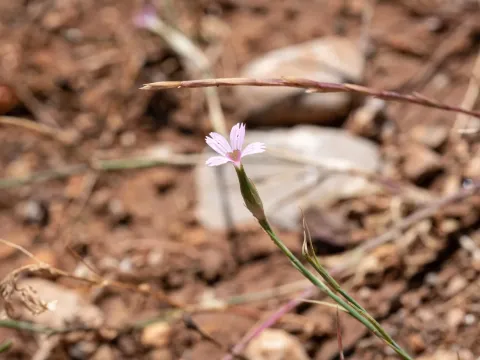
Three-spotted pink
Dianthus tripunctatus
Dianthus tripunctatus, commonly known as the three-spotted pink, is a member of the Caryophyllaceae family. It is an annual plant native to the Mediterranean region, adapted to Mediterranean-type climates.
What the section contains
Three-spotted pink
The culture requires full sun exposure to thrive. Sufficient light intensity is critical for the development of strong, erect stems and for the promotion of optimal flowering throughout the season.
The plant thrives in well-drained, neutral to slightly alkaline soils. It is highly intolerant of waterlogged conditions, which can lead to root system degradation and plant loss.
As a drought-tolerant species, it requires minimal irrigation once established. It performs well in arid or semi-arid environments, making it suitable for xeriscaping or low-maintenance flower beds.
Cultural practices include maintaining clear rows, periodic weeding to prevent competition for nutrients, and a balanced application of slow-release fertilizers during the active growth phase.
The three-spotted pink is susceptible to standard diseases affecting the genus, primarily those caused by excessive moisture. Fungal infections like root rot are common in poorly drained substrates.
Pests such as aphids and spider mites can be problematic during hot and dry spells. These insects feed on the plant sap, often congregating near the flower buds and young foliage.
Management strategies involve rigorous crop hygiene. Removing debris and maintaining appropriate spacing between plants ensures air circulation, which is a key preventive measure against fungal pathogens.
For chemical control, targeted insecticides and fungicides should be used sparingly according to the manufacturer's guidelines, taking care to minimize impact on local beneficial insect populations.
Early detection through frequent field inspections is the most effective approach for pest management, allowing for spot treatments rather than large-scale applications of chemicals.