
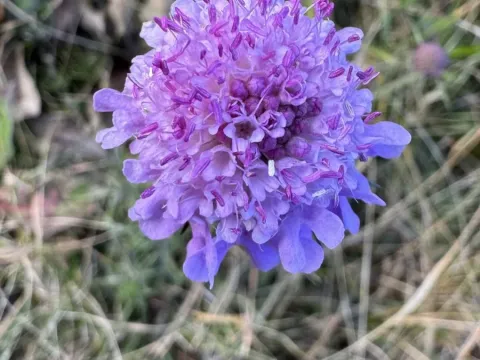
Scabiosa
Scabiosa L.
Scabiosa seeds are typically started indoors in early spring, about 6 to 8 weeks before the last expected frost. Using high-quality seed-starting mix and providing consistent warmth helps achieve high germination rates.
What the section contains
 Japanese pincushion flower
Scabiosa japonica Miq.
Japanese pincushion flower
Scabiosa japonica Miq.
 Mourning bride
Scabiosa atropurpurea L.
Mourning bride
Scabiosa atropurpurea L.
 Scabiosa
 atropurpurea L. x Scabiosa caucasica M. Bieb.
Scabiosa
Scabiosa atropurpurea L. x Scabiosa caucasica M. Bieb.
 Scabiosa africana
 L.
Scabiosa africana
Scabiosa africana L.
 Scabiosa caucasica
 M. Bieb.
Scabiosa caucasica
Scabiosa caucasica M. Bieb.
 Scabiosa columbaria
 L. x Scabiosa japonica Miq.
Scabiosa columbaria
Scabiosa columbaria L. x Scabiosa japonica Miq.
 Scabiosa comosa
 Fisch. ex Roem. & Schult.
Scabiosa comosa
Scabiosa comosa Fisch. ex Roem. & Schult.
 Scabiosa ochroleuca
 L.
Scabiosa ochroleuca
Scabiosa ochroleuca L.
 Scabiosa tschiliensis
 Grüning
Small scabious
Scabiosa columbaria L.
Scabiosa tschiliensis
Scabiosa tschiliensis Grüning
Small scabious
Scabiosa columbaria L.
 Starflower pincushion
Scabiosa stellata L.
Starflower pincushion
Scabiosa stellata L.
Scabiosa
For direct seeding, wait until the soil has warmed up in late spring. Sow seeds shallowly, as they require a bit of light to germinate effectively, and keep the soil lightly moist until seedlings appear.
Spacing is essential for the health of Scabiosa plants. Ensure that seedlings are thinned or planted at least 25 to 30 centimeters apart to allow for adequate airflow, which is critical in preventing fungal issues.
In regions with milder climates, Scabiosa can be sown in late autumn to establish root systems before the cold sets in, leading to earlier and more robust blooms in the following spring.
Regardless of the method, ensure the growing medium is well-drained. Overcrowding in the seed trays or in the field can quickly lead to damping-off disease, which can decimate young plant populations.
As a member of the Caprifoliaceae family, Scabiosa thrives in full sun, requiring at least six to eight hours of direct sunlight daily to produce high-quality, vibrant flowers suitable for cutting.
The soil must be fertile, neutral to slightly alkaline, and exceptionally well-drained. They do not tolerate "wet feet" and will suffer root rot if planted in heavy clay soils that retain excessive moisture.
Irrigation should be managed carefully, favoring a deep watering once or twice a week rather than light, frequent sprinkles. This encourages deep root development and increases the plant's overall drought tolerance.
Fertilization should be balanced, focusing on promoting blooming rather than excessive vegetative growth. A slow-release granular fertilizer applied once at the beginning of the season is usually sufficient for most soils.
Deadheading is a non-negotiable task for the commercial grower. Removing spent flower heads prevents the plant from setting seed and directs its energy back into producing a new flush of long-stemmed flowers.
Powdery mildew is the most common fungal ailment for Scabiosa, particularly in regions with high humidity and poor air circulation. Symptoms include a white, dusty-looking coating on the foliage.
Botrytis, or gray mold, can be devastating during prolonged wet weather. It often targets the flower buds, causing them to turn brown and rot before they ever have a chance to fully open.
Aphids are the primary insect pest, often clustering around the tender new growth and flower stalks. They suck the sap from the plant, which can stunt development and facilitate the spread of viral diseases.
Spider mites can also pose a threat, especially in hot, dry conditions. They are often difficult to detect until the foliage begins to show signs of yellowing or fine webbing appears on the undersides of leaves.
Integrated Pest Management (IPM) practices, such as introducing beneficial insects and maintaining proper plant spacing, are highly recommended to keep pest populations below the threshold that requires chemical intervention.
For cut flower production, harvest Scabiosa when the florets are just beginning to open but are still firm. This stage ensures the longest vase life and prevents damage during transport to the marketplace.
Early morning is the best time for harvesting, when the stems are fully turgid and hydrated. Placing the stems immediately into clean water helps them maintain their structure and prevents wilting.
Proper conditioning is vital: remove all foliage from the bottom half of the stem before placing it in the bucket. This reduces the risk of bacterial growth in the water, which can clog the stems.
Post-harvest, the flowers should be kept in a cool, shaded area. If they are to be stored for a short period, refrigeration at roughly 2-4 degrees Celsius will significantly extend their lifespan.
When collecting seeds for future crops, allow the flower heads to dry out completely on the plant. Once the heads turn brown and papery, harvest them and store the seeds in a dry, dark place until the next planting season.