
Starflower pincushion
Scabiosa stellata L.
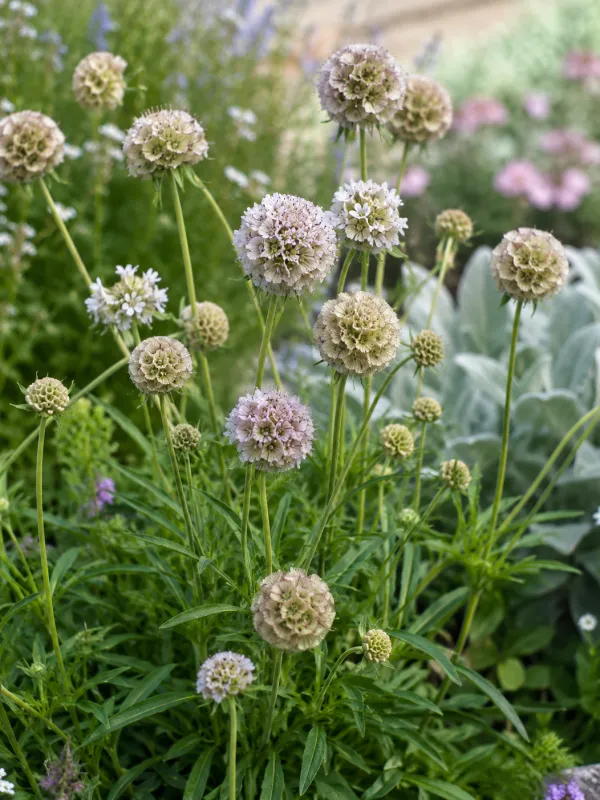
Description
Sowing dates
Seeds of Scabiosa stellata are sown directly into open ground in April or May, once the risk of night frosts has passed, as the crop is sensitive to temperature fluctuations.
To achieve earlier flowering, seedling cultivation in March is common, followed by pricking out into individual pots, which allows the root system to develop better before transplanting.
When sowing, seeds should be only lightly covered with nutrient substrate, ensuring access to light, which is crucial for the successful germination of this species.
The optimal planting density is 25–30 centimeters between plants, ensuring sufficient air circulation and preventing moisture stagnation in the root zone.
The sowing depth should not exceed 0.5–1 centimeter, as planting too deeply can significantly delay or stop germination entirely.
Growing requirements
Scabiosa stellata prefers sunny locations with light, well-drained soils that have a neutral or slightly alkaline pH level.
The plant does not tolerate waterlogging; therefore, in heavy clay soils, incorporating sand or gravel is necessary to improve drainage and aeration.
During the active growth phase, the crop requires moderate but regular watering, especially during droughts, although established plants can tolerate short-term moisture deficits.
The optimal temperature for full vegetative development is 18–22 degrees Celsius, and the plant shows high tolerance to direct sunlight exposure.
To maintain ornamental value and stimulate new bud formation, it is recommended to apply balanced mineral fertilizers with reduced nitrogen content periodically.
Yield
The crop's productivity is measured by the number of decorative flower heads, which develop their characteristic star-like shape upon maturity, highly valued in floristry.
With proper agronomic management, a single plant can produce up to 15–20 high-quality stems suitable for cutting and subsequent drying.
The flowering period of one specimen lasts from 4 to 6 weeks, making Scabiosa an excellent base for long-lasting floral arrangements.
Harvesting seeds is possible at the end of summer, but it is vital to wait for the "stars" to darken so the seeds can reach their full viability.
The yield of dried flowers directly depends on light intensity: the more sunlight the crop receives, the sturdier and more aesthetically pleasing the fruit becomes.
Main diseases and pests
The primary threat to Scabiosa is powdery mildew, which develops under high humidity and poor ventilation within the planting beds.
Root rots can occur due to excessive irrigation, making moisture control a key factor in preventing the loss of the crop.
Common pests include aphids and spider mites, which suck sap from young leaves, causing deformation and reducing the plant's decorative appeal.
For pest control, it is recommended to use biological preparations or systemic insecticides during early morning or evening hours when pollinator activity is low.
Preventive measures include timely weeding and the removal of affected plant parts to prevent the spread of fungal spores.
Harvesting
Harvesting for dried flower use is carried out at full maturity, when petals have dropped and the seed capsule has attained a stiff, star-shaped form.
Cut stems should be tied in small bundles and hung upside down in a dark, well-ventilated room for even drying.
It is crucial to keep the drying plants out of direct sunlight, as exposure may cause the natural color of the fruit to fade.
Properly dried heads of Scabiosa stellata retain their unique shape for several years, remaining a sought-after material in interior design.
Once completely dry, the plants can be lightly sprayed with a clear lacquer to add sheen and provide extra protection against dust and physical damage.