
Scabiosa cinerea
Scabiosa cinerea
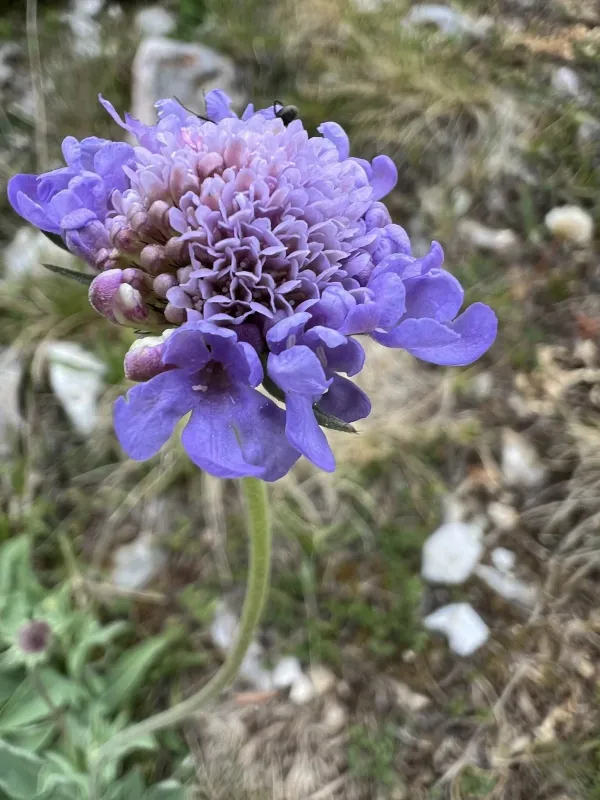
Description
Sowing dates
Scabiosa cinerea is a resilient herbaceous perennial belonging to the Caprifoliaceae family. Native to rocky mountain habitats in Europe, this species is well-adapted to well-drained, lime-rich substrates, making it an excellent choice for rock gardens and borders.
Seeds can be sown in late autumn or early spring. For controlled cultivation, starting seeds in containers during late winter is recommended to ensure uniform germination and to produce robust seedlings ready for transplanting once the risk of frost has passed.
The substrate for germination must be well-draining, as the seedlings are sensitive to high moisture levels in the early stages. Maintaining a temperature range between 15 and 20 degrees Celsius provides the best conditions for successful establishment.
Once established, the plants develop a deep taproot, which helps them access nutrients in poor soil. When transplanting to the final site, care should be taken to minimize root disturbance, as this species does not favor frequent movement once it has settled.
Spacing is a crucial aspect of successful planting; maintaining 30-40 centimeters between plants allows for optimal airflow, which is essential to prevent fungal issues and ensure the plants can display their characteristic mound-shaped foliage and flower stems.
Growing requirements
Scabiosa cinerea thrives in full sun, which is essential for producing high-quality flowers and maintaining a compact growth habit. In low-light conditions, stems tend to become leggy and structurally weak, which significantly impacts the aesthetic appeal.
The ideal soil is porous, rocky, or sandy with a neutral to alkaline pH. Heavy clay soils that retain excessive water should be amended with organic matter and grit to improve aeration and prevent the development of root diseases.
Water management is the most important factor in maintenance. While established plants are relatively drought-tolerant, they require supplemental watering during prolonged dry spells to ensure continuous blooming, though the soil must never remain waterlogged.
Fertilization should be handled with care. A low-nitrogen, balanced fertilizer applied once in the spring is usually sufficient. Excessive nitrogen leads to vegetative overgrowth, which weakens the plant's natural resistance to environmental stress and pests.
For winter care, mulch the base of the plant to protect the crown from extreme temperature fluctuations. In temperate climates, the foliage might persist through winter, but in colder regions, the plant may go completely dormant before re-emerging in spring.
Main diseases and pests
Powdery mildew is a common fungal pathogen that affects foliage during periods of high humidity and poor air circulation. Effective control involves removing infected parts and applying preventative fungicides to keep the leaves healthy and vibrant.
Root rot, often caused by Pythium or Phytophthora, represents the most significant threat to this species. It is directly linked to soil drainage issues; once the root system is compromised, the plant usually collapses, making preventative soil management vital.
Aphids can frequently target the buds and fresh shoots, sucking plant sap and potentially transmitting viral diseases. Early intervention with insecticidal soaps or systemic treatments is effective at managing populations before they cause significant damage.
Spider mites are prevalent in hot, dry weather. They thrive in dusty environments, so keeping plants well-hydrated and applying horticultural oils can help suppress their activity and protect the leaf integrity throughout the active growing season.
Slugs and snails can cause mechanical damage to the seedlings and younger leaves. Implementing physical barriers like coarse gravel or crushed eggshells around the base can help deter these pests without relying heavily on chemical molluscicides.