
Scabiosa hymettia
Scabiosa hymettia
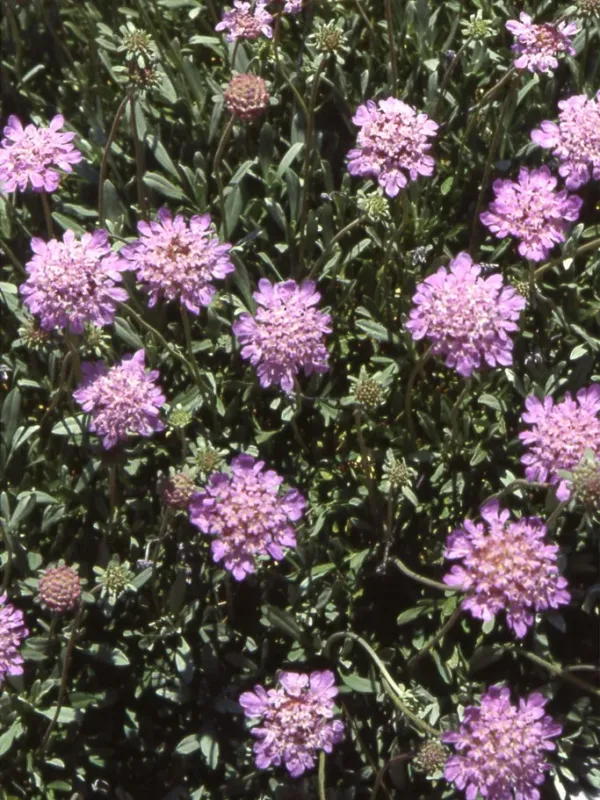
Description
Sowing dates
Scabiosa hymettia is a perennial herbaceous plant belonging to the Caprifoliaceae family. For optimal cultivation, seeds should be sown in March or April in a controlled greenhouse environment.
In regions with mild spring conditions, direct sowing in open ground is possible once the danger of frost has passed in May. Seeds should be sown at a shallow depth of 0.5–1 cm to ensure adequate light exposure for germination.
The substrate must be well-draining, consisting of a mix of potting soil and perlite. A temperature range between +18 and +22 degrees Celsius is ideal for successful seedling development.
Transplanting to individual pots should occur when the first pair of true leaves appears. Hardening off seedlings is a crucial step to acclimatize them to outdoor environmental stressors.
Maintain a planting density of 9–12 plants per square meter to ensure proper airflow and decrease the risk of foliage diseases throughout the growing season.
Growing requirements
Native to the mountainous regions of Greece, this species thrives in locations with full solar exposure. Adequate sunlight is essential for strong stems and vibrant floral display.
The plant requires neutral to slightly alkaline, well-draining limestone-based soil. Heavy or waterlogged soil is unsuitable and will lead to rapid root decay.
Watering should be moderate, focusing on the root zone rather than the foliage. Use drip irrigation or a watering can to avoid wetting the flowers, which reduces the incidence of fungal growth.
Fertilization with low-nitrogen, balanced mineral fertilizers during the budding phase is recommended to support continuous blooming and maintain structural integrity.
Providing a dry and sheltered environment during the dormant season is important for the plant's survival in colder climates, as it is adapted to Mediterranean conditions.
Main diseases and pests
Powdery mildew is the primary threat to the plant, especially in areas with poor ventilation and high humidity. Proactive spacing and site selection are the best defenses.
Root rot caused by stagnant moisture is a critical concern. Ensuring a high-quality drainage layer in the planting site is essential for long-term plant health.
Aphids and spider mites are common pests that target young shoots and leaves. Regular monitoring during hot, dry spells allows for early detection and targeted management.
Utilize integrated pest management practices, including biological controls or systematic insecticides, to mitigate infestations without damaging the local pollinator population.
Maintain general garden hygiene by removing debris and weeds around the plants to reduce the reservoir for potential pathogens and insect pests.
Harvesting
Scabiosa hymettia is primarily used for ornamental landscaping, particularly in rock gardens or naturalistic borders. It serves as an excellent cut flower for arrangements.
Harvesting for bouquets should be done early in the day when the florets are fully open. Recutting the stems and using fresh water helps prolong the vase life.
For seed production, allow the most robust flower heads to remain on the plant until they are completely dry and the seed capsules have turned brown.
Harvested seeds should be cleaned, dried thoroughly in a ventilated area, and stored in paper bags in a cool, dark location to maintain high germination rates.
Regular deadheading of spent blooms is an essential horticultural practice that redirects the plant's energy toward creating new flower stems throughout the season.