
Golden-flowered honeysuckle
Lonicera chrysantha
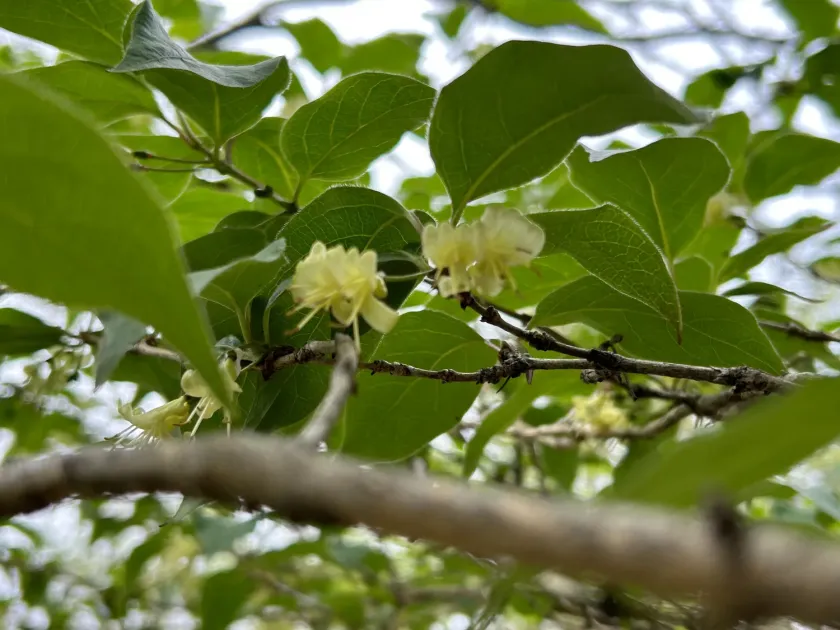
Description
Sowing dates
Propagation of Lonicera chrysantha is typically achieved through seed sowing or softwood cuttings. Seeds sown in autumn undergo natural stratification, which promotes better germination in spring.
If spring sowing is preferred, seeds must be artificially stratified in cool conditions for several weeks to break dormancy and ensure consistent growth.
Softwood cuttings are taken during the active growing season, usually in early summer. These cuttings require a humid environment and partial shade to develop roots successfully.
Using rooting hormones can significantly increase the success rate when propagating this species from cuttings, ensuring a stronger root system for young plants.
Transplanting young saplings into their permanent location is best performed during the dormant season, either in early spring or late autumn.
Growing requirements
Golden-flowered honeysuckle belongs to the Caprifoliaceae family and is a deciduous, vigorous shrub native to Eastern Asia, often found in forest edges and clearings.
The plant is highly adaptable to various soil types, provided they are well-drained and maintain moderate fertility throughout the growing season.
It thrives in full sun to partial shade, showing remarkable resistance to urban pollution and wind, which makes it an excellent choice for landscaping and hedge building.
Regular maintenance involves light pruning to manage the shape and size of the shrub, as well as the removal of deadwood to encourage vigorous new growth.
Watering should be consistent during the first year of establishment, after which the plant exhibits excellent drought tolerance in established landscapes.
Main diseases and pests
While generally hardy, Lonicera chrysantha can be susceptible to powdery mildew in environments with poor air circulation or excessive humidity.
Pests such as aphids and leafrollers can occasionally infest the foliage, particularly during the warm months when new growth is most succulent.
Effective pest management includes regular inspection of the leaves and the application of organic or chemical insecticides if infestations become widespread.
To prevent fungal diseases, it is crucial to ensure the plant is placed in an area with adequate spacing and good sunlight exposure to facilitate drying of the leaves.
Good hygiene practices, such as clearing debris from around the base of the shrub in autumn, help significantly in reducing the overwintering populations of pests.