
Mountain scabious
Knautia montana
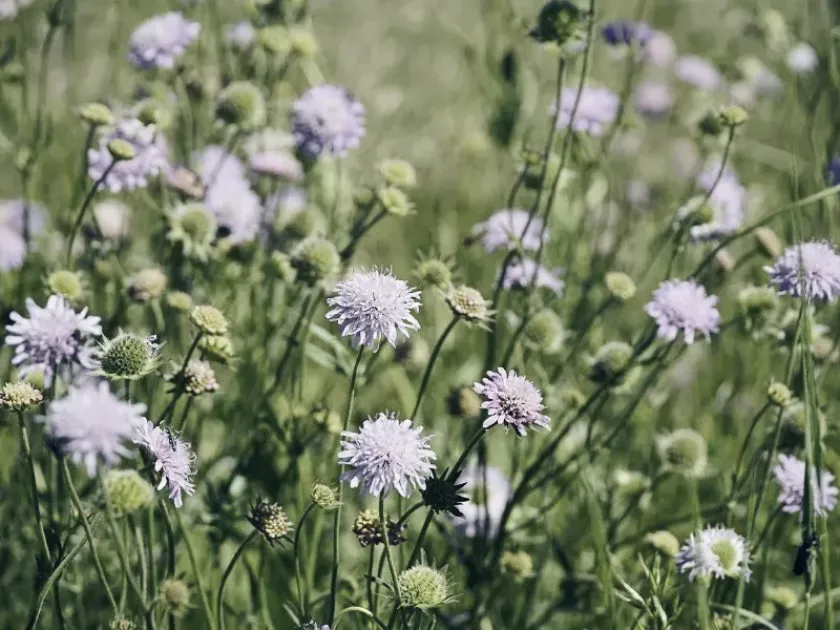
Description
Sowing dates
Sowing Knautia montana requires careful attention to the timing, as seeds often benefit from a period of cold stratification to ensure high germination rates.
For best results, seeds should be sown in late autumn, allowing them to experience winter temperatures which break their natural dormancy phase effectively.
Spring sowing is also possible, but it requires cold pre-treatment of the seeds or sowing them in a greenhouse environment with controlled temperatures.
The seeds should be covered lightly with a thin layer of soil, not exceeding 10 millimeters, as they require a certain level of light exposure to germinate.
Spacing should be managed to ensure adequate ventilation, typically leaving 30–40 centimeters between individual plants to prevent moisture-related issues.
Growing requirements
Knautia montana, a member of the Caprifoliaceae family, is native to mountainous regions and naturally thrives in sunny, well-drained meadow environments.
The soil should be light, porous, and neutral or slightly alkaline, as the plant is highly sensitive to waterlogged conditions that lead to root rot.
This species is exceptionally cold-hardy, capable of surviving harsh winters, which makes it an excellent perennial for regions with significant temperature fluctuations.
Adequate sunlight is essential for strong stem development and consistent flower production throughout the growing season.
While the plant is quite drought-tolerant once established, providing supplemental irrigation during prolonged dry spells will improve its overall health and bloom density.
Yield
Mountain scabious is highly valued in agriculture as a robust nectar source, significantly boosting the biodiversity of local pollinator populations.
In addition to its role in beekeeping, the plant produces a significant amount of foliage that can be utilized for soil enrichment or as a minor fodder component.
The yield of biomass is sustainable and can be integrated into pasture management programs to provide structural diversity within the field.
The long flowering season, spanning from early summer through late August, makes it a reliable asset for maintaining pollinator activity on the farm.
Harvesting for seed production should be performed when the seed heads turn brown to ensure maximum maturity and vitality for future crops.
Main diseases and pests
The primary threats to Knautia montana include fungal infections such as powdery mildew, which often occur in sites with poor air circulation or high humidity.
Aphids can also colonize the stems and floral buds, potentially reducing the nectar quality and vigor of the plant during the peak blooming period.
Integrated pest management strategies should focus on natural predators and maintaining healthy growing conditions rather than relying solely on chemical treatments.
Ensuring proper plant spacing is the most effective preventative measure against the rapid spread of diseases within the planting area.
Regular inspection of the crop during the spring months allows for the early detection and management of any pest outbreaks before they impact yield.