
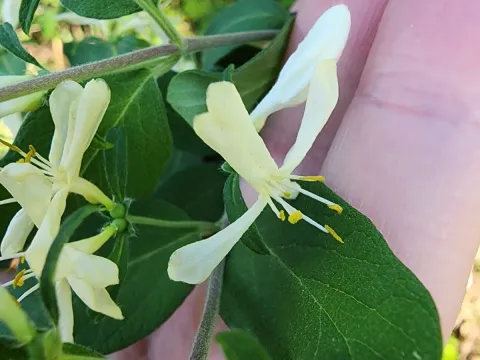
Morrow's honeysuckle
Lonicera morrowii
Morrow's honeysuckle (Lonicera morrowii) is a deciduous shrub belonging to the Caprifoliaceae family. Originally native to Japan, this plant has been introduced to various regions of the world, where it is prized for its hardiness and rapid growth.
What the section contains
Morrow's honeysuckle
The shrub reaches heights of up to 2.5 meters and features a dense, spreading canopy. Its foliage is oval-shaped, and the plant produces white-to-yellow flowers in the spring, which are followed by small red or orange berries that are typically considered inedible for humans.
The species is highly adaptable to various soil types, but it thrives best in well-drained, fertile loam. It requires full sun to partial shade for optimal flowering. While it is drought-tolerant once established, supplemental watering during prolonged dry spells ensures a more vigorous appearance.
Routine maintenance includes structural pruning to manage its size and prevent it from becoming too dense. Because it is a vigorous grower, it is often utilized in public landscaping, soil erosion control on slopes, and as a barrier hedge.
Due to its high regenerative capacity, it is considered a hardy plant for urban environments. However, in some non-native ranges, it is monitored for its potential to outcompete local flora, so it should be planted with landscape management in mind.
The plant is susceptible to honeysuckle aphid infestations, which can cause leaf curling and stunted shoot growth. Regular inspection of the foliage during spring is essential for the early detection and management of pest populations.
Powdery mildew represents the most frequent fungal challenge, especially in environments with high humidity and poor airflow. Managing the density of the canopy through pruning is the best cultural practice to prevent this condition.
Scale insects can occasionally affect the woody parts of the shrub, leading to weakened stems. If identified, horticultural oils can be applied during the dormant season to manage these pests without harming the plant.
Bacterial blight can sometimes appear under persistent wet conditions, causing spots on the foliage. Removing and destroying infected plant material is recommended to prevent the spread of the pathogen to the rest of the shrub.
Integrated pest management, combining cultural practices with targeted treatments when necessary, ensures the long-term health and aesthetic appeal of Morrow's honeysuckle in the garden.