
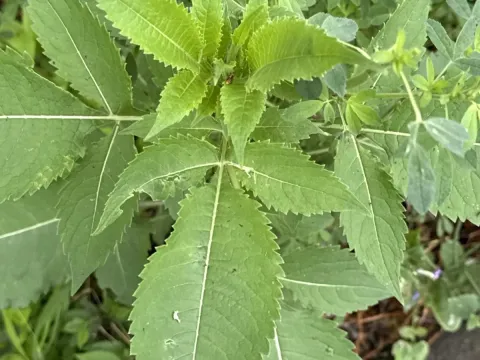
Japanese teasel
Dipsacus japonicus
Japanese teasel is primarily propagated through seeds. Sowing is usually carried out in early spring as soon as the soil warms up to 8–10 degrees, or in late autumn.
What the section contains
Japanese teasel
For spring sowing, it is highly recommended to stratify the seeds for 30–45 days at a temperature of about 4 degrees to significantly increase germination rates.
The seeds should be sown at a depth of no more than 1–2 centimeters, as they require sufficient light exposure to successfully germinate.
To ensure optimal plant density and growth, maintain a row spacing of 40–50 centimeters, which provides enough nutrition for each individual plant.
Seedlings typically emerge within 2–3 weeks after sowing, provided that the top layer of the soil remains consistently moist throughout the germination phase.
The plant belongs to the Dipsacaceae family and is characterized as a herbaceous biennial with a robust and deep taproot system.
Japanese teasel prefers sunny, well-lit areas, although it demonstrates a tolerance for partial shade without significant loss in total biomass production.
The crop is relatively demanding regarding soil fertility; it performs best in loamy, well-drained soils with a neutral or slightly alkaline pH level.
Due to its deep root structure, the plant is quite drought-resistant, yet it requires regular irrigation during active growth phases to produce high-quality raw material.
In temperate climate zones, Japanese teasel exhibits high cold hardiness, allowing it to be cultivated successfully in many regions without the need for winter protection.
The primary challenges during cultivation are associated with excessive soil moisture, which can trigger the development of root rots and Fusarium wilt.
The leaf blades can occasionally be affected by powdery mildew, especially during periods of high atmospheric humidity and sharp temperature fluctuations.
Common pests found in teasel plantings include aphids and spider mites, which feed on young shoots and lead to a reduction in the plant's overall vigor.
To control fungal diseases, it is advisable to use broad-spectrum fungicides at the start of the growing season as a preventative measure.
Regular weeding and cultivation between the rows are essential not only to control weeds but also to improve soil aeration, thereby reducing pathogen prevalence.
The commercial use of Japanese teasel primarily centers on its roots, which are harvested at the end of the first or the start of the second growing season.
The rhizomes are typically dug up in autumn, once the aerial parts of the plant begin to yellow and wither, indicating maximum accumulation of active compounds.
Harvested material must be thoroughly cleaned of soil residues, washed in running water, and dried in well-ventilated areas or dedicated industrial dryers.
The drying temperature for the roots should not exceed 50–60 degrees to ensure that the biologically active substances remain fully intact and potent.
Once dried, the roots become hard and brittle; they should be stored in paper bags in a dry, dark place where they retain their medicinal properties for up to two years.