
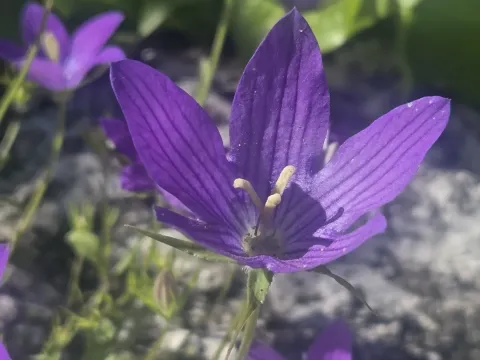
Branching bellflower
Campanula ramosissima
The branching bellflower (Campanula ramosissima) is an annual herbaceous plant belonging to the Campanulaceae family. In agricultural and horticultural practice, seeds are sown directly into open ground in the spring once the soil has warmed up, typically between late April and May.
What the section contains
Branching bellflower
To achieve earlier flowering, it is possible to start seedlings indoors. Sowing in flats should be done in March using a light, nutrient-rich substrate, without burying the seeds deeply, as they require light to germinate effectively.
When sowing in open ground, it is recommended to follow a planting pattern, leaving at least 20-25 centimeters between plants to ensure proper aeration of the bush. The seeds are very fine, so they are often mixed with sand to ensure more uniform distribution across the garden bed.
The optimal temperature for seed germination is 18-20 degrees Celsius. The first shoots typically appear two to three weeks after sowing, provided that the top layer of soil is kept consistently moist.
The culture is characterized by a rapid development cycle as an annual. Intensive shoot growth begins just one month after germination, which requires an adequate supply of nutrients in the soil.
The plant prefers well-lit areas, as stems tend to become excessively elongated in shade, losing their decorative appearance and structural integrity. Light shading during the hottest hours of the day is acceptable in regions with very hot summers.
Soils for the successful cultivation of Campanula ramosissima should be light, well-drained, and neutral in pH. Heavy clay soils require the addition of sand and compost to improve structure and prevent water stagnation.
The culture is sensitive to excessive moisture in the root system, which can lead to decay. Watering should be moderate but regular, especially during periods of prolonged drought and active flowering.
For the plant to develop fully, it is necessary to provide protection from strong winds, which can damage the fragile branching stems. In open flower beds, it is recommended to plant them in areas sheltered from drafts.
Mineral fertilizers are applied during the active growth phase, using complexes with reduced nitrogen content to stimulate flowering rather than just excessive green mass development.
The economic value of the branching bellflower lies primarily in its high decorative appeal and long flowering period. With proper agricultural techniques, a single plant forms a large number of flowering stems, creating a spectacular, lush bush.
Mass flowering begins in early summer and continues until autumn, provided that wilted inflorescences are removed in a timely manner. This helps stimulate the emergence of new buds on the side shoots.
The use of the plant in landscape design is justified by its lack of pretentiousness and its ability to quickly cover empty space. It is frequently used in the creation of mixed borders and wildflower-style meadows.
The seed productivity of the species is high, which allows for the collection of your own planting material for the next season. Seeds retain their viability for up to three years if stored properly in a cool, dry place.
On a commercial scale, cultivation is primarily conducted by ornamental plant nurseries for seedling sales, ensuring stable demand for quality seed material.
The main threat to the plant consists of fungal diseases that develop under conditions of high humidity and poor ventilation, such as powdery mildew and various types of root rot.
To prevent disease, it is crucial to observe proper watering rates and avoid overcrowding the planting area. Sanitary pruning of damaged plant parts helps stop the spread of infection at an early stage.
Among pests, slugs and snails cause the most damage, especially during rainy periods. They actively eat young leaves and shoots, which significantly reduces the ornamental value of the culture.
Aphid attacks are also possible, as they suck juices from the young inflorescences. Combatting them is carried out by using contact or systemic insecticides approved for use in floriculture.
Nematodes can affect the root system, resulting in stunted growth and yellowing leaves. As a defensive measure, crop rotation must be practiced, and only healthy planting material should be used.
Harvesting of branching bellflower seeds is conducted after the seed pods have fully matured, when they turn a brown hue and become dry. It is important to harvest them before they begin to crack and drop their seeds onto the ground.
Cut inflorescences with pods are dried on paper in a well-ventilated room, after which the seeds are easily extracted. The resulting material is cleaned of plant debris using a sieve.
When using the plant as a cut flower, stems are harvested at the beginning of the opening of the first buds. This allows the bouquet to last up to ten or more days in a vase with regular water changes.
Removing faded shoots throughout the entire season is an important agronomic practice. This not only improves the aesthetic appearance of the site but also prevents the plant from exhausting itself by forming seeds.
At the end of the season, after the onset of frost, the above-ground part of the plant is disposed of, and the site is tilled to prepare the soil for the next planting period.