
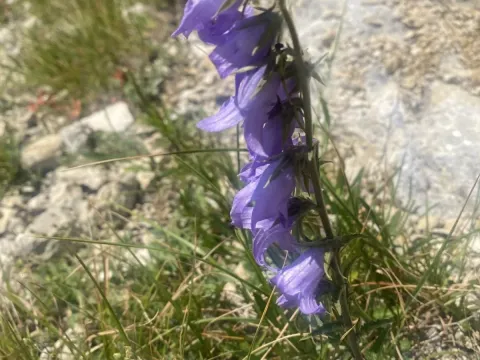
Sarmatian bellflower
Campanula sarmatica
The Sarmatian bellflower (Campanula sarmatica) is a member of the Campanulaceae family. This perennial herbaceous plant is valued in horticulture for its unique aesthetic appeal and resilience in rock gardens.
What the section contains
Sarmatian bellflower
Propagation is typically performed by seeds. Sowing in open ground should be timed for late autumn, allowing the seeds to undergo natural stratification during the winter months for optimal germination.
For greenhouse cultivation, seeds are sown in early spring into a lightweight, sterile substrate. Because the seeds are tiny, they should not be covered with soil, but rather pressed gently into the surface to maintain contact.
Keeping a consistent temperature of about 18–20 degrees Celsius is essential for seedling development. Once the first true leaves emerge, the seedlings require bright, indirect light to ensure they develop strong stems.
When the plants reach the size of a small rosette, they are transplanted to their permanent location. Proper spacing, typically 30–40 cm apart, is crucial to prevent fungal issues caused by humidity.
Native to the mountainous terrains of the Caucasus, this plant is naturally adapted to rocky, well-draining soils. It performs best in sunny locations but can handle partial shade during the hottest parts of the day.
The ideal soil for Campanula sarmatica is slightly alkaline or neutral, porous, and rich in mineral content. It does not tolerate "wet feet," so soil drainage must be a primary concern when selecting a site.
In terms of climate, the species is quite hardy and capable of withstanding the temperature fluctuations typical of continental climates. Protection from harsh, drying winds in the winter can improve the plant's survival rate.
Watering should be managed carefully. During the active growing season, consistent moisture is necessary, but the soil should be allowed to dry out slightly between waterings to prevent root rot.
Fertilization with balanced NPK formulas early in the spring supports the development of lush foliage and multiple flower spikes. Avoid high-nitrogen fertilizers that lead to overly rapid growth and weakened flower stalks.
The most common health issues for the Sarmatian bellflower are fungal diseases, particularly powdery mildew, which thrives in stagnant, humid environments with poor air circulation.
Root rot is a significant danger in poorly drained clay soils. If the soil remains saturated for extended periods, the plant’s root system will quickly succumb to pathogens, necessitating the use of fungicides or soil amendments.
Pests such as slugs and snails are problematic during the early growth stages, as they can devour young shoots overnight. Physical barriers or organic repellents are effective ways to manage these populations.
Aphids can accumulate on the flower buds, distorting growth and spreading viral infections. Regular monitoring is essential, and aphids can be controlled with insecticidal soap if outbreaks occur.
Good cultural practices, such as thinning out plants for airflow and keeping the base of the plant free from debris, are the most effective strategies for preventing infestations and disease.
The Sarmatian bellflower is primarily used for ornamental purposes in rock gardens, borders, and alpine-style landscaping, providing a consistent display of soft, bell-shaped flowers.
For those interested in seed collection, the stalks should be left until the seed capsules are brown and firm, but before they split open. The capsules are harvested, dried, and cleaned to isolate the seeds.
As a cut flower, the spikes should be harvested when the first few flowers on the stalk begin to open. Recutting the stems under water before placing them in a vase will maximize their longevity.
To promote long-lasting blooms, it is important to perform regular deadheading. Removing spent flowers prevents the plant from setting seed, allowing it to reallocate resources to continued flower production.
At the end of the season, after the plant enters dormancy, the foliage should be pruned down to the soil surface. This ensures the plant spends the winter without the burden of dead material, which could harbor pests.