
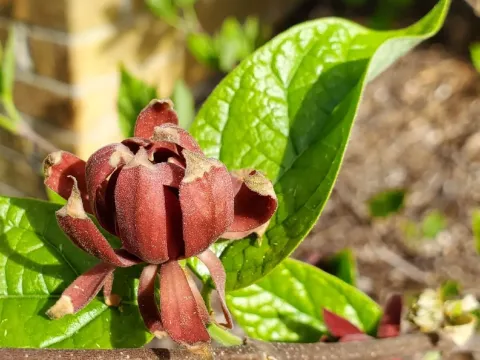
Calycanthus
Calycanthus L.
Propagation of Calycanthus is commonly achieved through seeds or vegetative methods, such as layering and division. Seeds should be sown in autumn for natural stratification or indoors after a minimum two-month cold treatment at refrigerator temperatures.
What the section contains
 Calycanthus chinensis x Calycanthus occidentalis
Calycanthus chinensis x Calycanthus occidentalis
Calycanthus chinensis x Calycanthus occidentalis
 Carolina allspice
Calycanthus floridus L.
Carolina allspice
Calycanthus floridus L. var. purpureus Boom
Carolina allspice
Calycanthus floridus L.
Carolina allspice
Calycanthus floridus L. var. purpureus Boom
 Chinese waxcup
Calycanthus chinensis (W. C. Cheng & S. Y. Chang) W. C. Cheng & S. Y. Chang ex P. T. Li
Raulston's Allspice
Calycanthus x raulstonii (F. T. Lass. & Fantz ) F. T. Lass. & Fantz ex Bernd Schulz
Chinese waxcup
Calycanthus chinensis (W. C. Cheng & S. Y. Chang) W. C. Cheng & S. Y. Chang ex P. T. Li
Raulston's Allspice
Calycanthus x raulstonii (F. T. Lass. & Fantz ) F. T. Lass. & Fantz ex Bernd Schulz
 Western spicebush
Calycanthus occidentalis Hook. & Arn.
Western spicebush
Calycanthus occidentalis Hook. & Arn.
Calycanthus
When sowing seeds in a nursery, use a lightweight, well-draining soil mix. Maintain consistent moisture levels, as the seeds require a stable environment to break dormancy and emerge successfully within several weeks.
Layering is considered the most reliable vegetative method. In early spring, select flexible lower branches, pin them to the soil surface, and cover with mulch to encourage root development at the node contact points.
Cuttings should be taken during mid-summer using semi-hardwood stems. Apply a rooting hormone before planting in a propagation tray filled with peat and sand, ensuring high humidity under a greenhouse cover or plastic dome.
Once roots are established, young plants require careful acclimatization. Gradually expose them to lower humidity levels before transplanting them into individual containers or directly into the garden landscape during the following season.
Calycanthus is a genus of deciduous shrubs in the Calycanthaceae family, native to North America. Known for its unique, spicy-scented, wine-colored flowers, it is a prized addition to any ornamental collection or sensory-focused garden.
The plants thrive in fertile, moisture-retentive, yet well-drained soils. A pH balance that is slightly acidic to neutral provides the optimal conditions for nutrient uptake and steady, healthy growth throughout the summer season.
Select a location that receives partial shade or dappled sunlight, especially in warmer climates where direct afternoon sun might scorch the foliage. Protection from strong, drying winds is essential to preserve the integrity of the flowers.
Routine care involves regular watering, particularly during dry spells, and annual mulching with organic material to keep the root zone cool and hydrated. Fertilize in early spring with a balanced compost or slow-release fertilizer.
For landscape usage, Calycanthus works exceptionally well in shrub borders or as specimen plants near patios where the fragrance can be fully appreciated. Regular pruning is recommended to maintain shape and promote a denser growth habit.
Calycanthus is generally resistant to serious diseases, provided that soil moisture is managed correctly. Poor drainage can lead to root rot, which is the most significant threat to the plant's health and longevity in garden settings.
Occasionally, sap-sucking insects like aphids or spider mites may appear on new foliage during hot, dry weather. Monitoring the underside of leaves for early signs of infestation is crucial for effective and quick control measures.
If pests are identified, use horticultural soaps or neem oil as a first-line treatment, which are effective while remaining relatively gentle on beneficial garden insects. Avoid using harsh chemicals unless the infestation is severe.
Sanitation practices, such as clearing fallen leaves and debris from the base of the shrub in autumn, help prevent overwintering of pests and fungal pathogens. This simple practice significantly reduces the risk of disease spread.
Structural maintenance through thinning the canopy is vital. Removing dead, damaged, or crossing branches allows for improved air circulation and sunlight penetration, which keeps the plant vigorous and less susceptible to environmental stressors.