
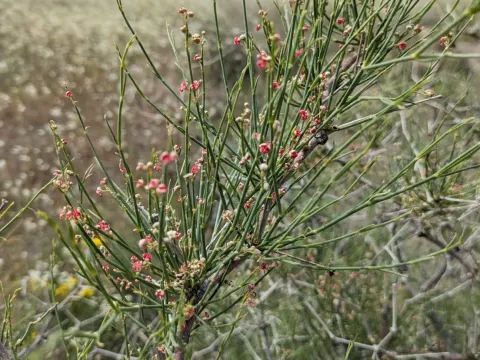
Calligonum polygonoides
Calligonum polygonoides
Propagation of Calligonum polygonoides is primarily achieved through seeds, which require specific moisture conditions to germinate effectively in their native desert habitats.
What the section contains
Calligonum polygonoides
Sowing should be timed with the onset of the rainy season, allowing the seedlings to establish a deep root system before the extreme heat of the summer months.
Seeds are often sown in prepared furrows or directly into sandy areas to ensure the best possible contact with soil particles, which helps retain moisture for the sprouting phase.
Clearing the seeds of their outer husks prior to sowing can significantly improve germination rates, as it allows for quicker water absorption by the embryo.
In large-scale restoration projects, nursery-grown seedlings are often utilized to increase the survival rate when planting on active sand dunes or reclaimed land.
Calligonum polygonoides is a member of the Polygonaceae family, highly specialized for surviving in harsh, arid desert and semi-desert climates.
The shrub displays remarkable xerophytic adaptations, such as having reduced leaves and photosynthetic stems, which drastically minimize water loss through transpiration.
It thrives in deep sandy soils and dunes, where its deep, extensive root system allows it to access groundwater that is otherwise unavailable to most surface vegetation.
The plant is highly tolerant of strong winds, extreme temperature fluctuations, and periodic burial by shifting sands, which it compensates for by developing new roots.
Sunlight is critical for its development; as a heliophyte, it does not tolerate shading and must occupy open areas to reach its full physiological potential.
The yield of this crop is measured by the total amount of green biomass it produces, which serves as a vital forage source for desert livestock such as camels and sheep.
Its nutritional value is particularly important during the autumn and winter months, as the plant retains green stems and nutrients when most other flora have wilted.
Beyond its feed value, the yield efficiency is often assessed by its performance in land reclamation, where it acts as a windbreak and sand-fixing agent.
Sustainable productivity is maintained by managing grazing pressure to prevent the over-depletion of the shrub's carbohydrate reserves stored in its massive root system.
The plant demonstrates good resilience in producing biomass even under erratic rainfall patterns, making it a reliable component of desert agricultural systems.
Calligonum polygonoides is naturally resistant to many common agricultural diseases, though high humidity levels can occasionally promote fungal pathogens on its stems.
Pest issues primarily involve various insects that feed on terminal buds and young shoots, which can retard the growth of young plants during their vulnerable stages.
The most significant threat to the survival of these shrubs is excessive overgrazing, which depletes the plant's resources and prevents natural regeneration of the population.
Soil compaction caused by heavy livestock traffic can also negatively affect the aeration of the root zone, leading to a decline in overall shrub health and vitality.
Integrated pest management strategies focusing on biological control are preferred, as chemical applications are impractical and often detrimental to the fragile desert ecosystem.