
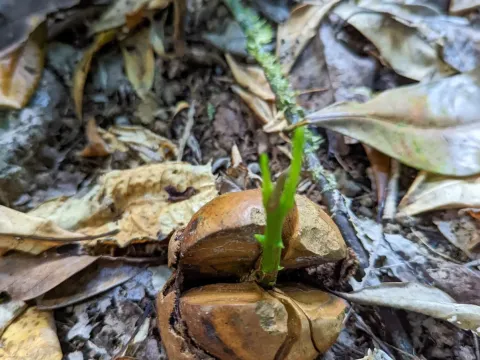
Idiospermum
Idiospermum
Idiospermum (Idiospermum australiense) is a rare, ancient member of the Calycanthaceae family. It is an endemic species native exclusively to the tropical rainforests of Queensland, Australia.
What the section contains

Idiospermum
This species requires a highly specialized environment with stable tropical temperatures and consistently high humidity. It is extremely sensitive to drought and cold, making open-field cultivation impossible in non-native climates.
The ideal growing substrate is a nutrient-rich, moist, and well-draining soil profile that mimics the forest floor. Young plants require heavy shade, while mature specimens need filtered light to thrive without suffering from leaf scorch.
As a primitive plant species, Idiospermum has unique physiological traits that necessitate extremely careful management in artificial conditions. Growth is slow, and the plant requires long-term dedication for successful maintenance.
The botanical value of this species lies in its evolutionary history, providing scientists with insights into ancient flora. It is currently found mostly in controlled botanical research facilities.
The primary threat to the natural population is habitat fragmentation and climate instability. In managed environments, fungal infections are the most frequent threat, especially if ventilation is inadequate for the high humidity needs.
Root rot is a critical risk factor if the irrigation management is poor or if the substrate lacks proper structure. Maintaining a balanced soil moisture level is essential for preventing decay of the sensitive root system.
Common indoor pests, such as spider mites or mealybugs, can infest the foliage if the air becomes too stagnant or dry. Integrated pest management protocols must be strictly followed to avoid damaging the delicate tissues of the plant.
Idiospermum contains toxic alkaloids that make it dangerous for livestock. This characteristic limits its potential for any agricultural use in areas near grazing lands or integrated agroforestry systems.
Given its rarity, the plant is subject to strict protection laws. Any cultivation project must prioritize conservation and strict adherence to environmental regulations to avoid negative impacts on the existing specimens.