
Raulston's Allspice
Calycanthus x raulstonii (F. T. Lass. & Fantz ) F. T. Lass. & Fantz ex Bernd Schulz
Description
Growing requirements
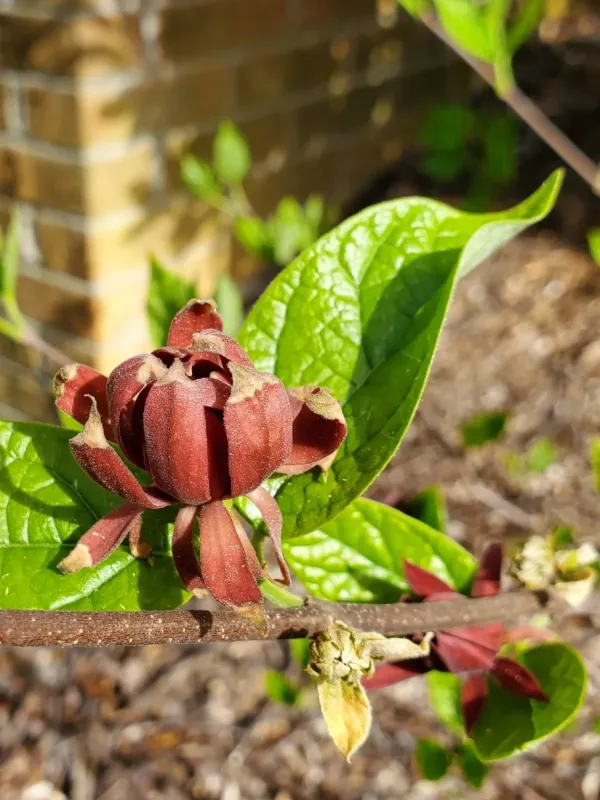
Raulston's Allspice is a distinctive hybrid deciduous shrub belonging to the Calycanthaceae family. It is a cross between Calycanthus floridus and Calycanthus chinensis. The shrub is highly prized for its unique, complex floral fragrance, which carries notes of strawberry, pineapple, and spice, and typically reaches a height of 2–3 meters.
This shrub thrives in positions that provide full sun to partial shade, sheltered from harsh, desiccating winds. In regions with extremely hot summers, partial shade is strongly recommended to protect the foliage. While relatively hardy, young specimens benefit significantly from heavy mulching during their first few winters to protect the root zone.
Soil requirements focus on fertility and excellent drainage. The plant prefers slightly acidic to neutral, loam-based soils. It is critical to ensure that the site does not suffer from waterlogging, as the roots are sensitive to anaerobic conditions. Incorporating organic matter into the soil at planting helps maintain the structure and nutrient levels.
Maintenance involves routine care including moderate watering during dry spells and annual pruning. Pruning should be carried out in early spring to shape the plant and remove any dead or weak wood, which encourages vigorous growth and better flower production in the coming season.
In landscaping, Raulston's Allspice is primarily used as an ornamental specimen plant. Because of the intense fragrance released by the dark, reddish-brown flowers, it is best placed in areas where people can sit and enjoy the scent, such as near garden seating, patios, or pathways.
Main diseases and pests
The plant is generally robust and maintains good resistance to many common garden diseases. Problems typically arise only when the plant is stressed due to poor soil conditions or excessive moisture. Improving air circulation around the shrub and ensuring proper drainage are the primary preventative measures against potential fungal issues.
Pests are rarely a significant concern for this species, though aphids and spider mites can occasionally appear during prolonged dry, hot weather. Monitoring the underside of the leaves is advised, and if an infestation is detected, it can be easily managed with insecticidal soap or horticultural oil.